Top 10 Best Animated Movies of All Time: Toy Story, Spirited Away & More
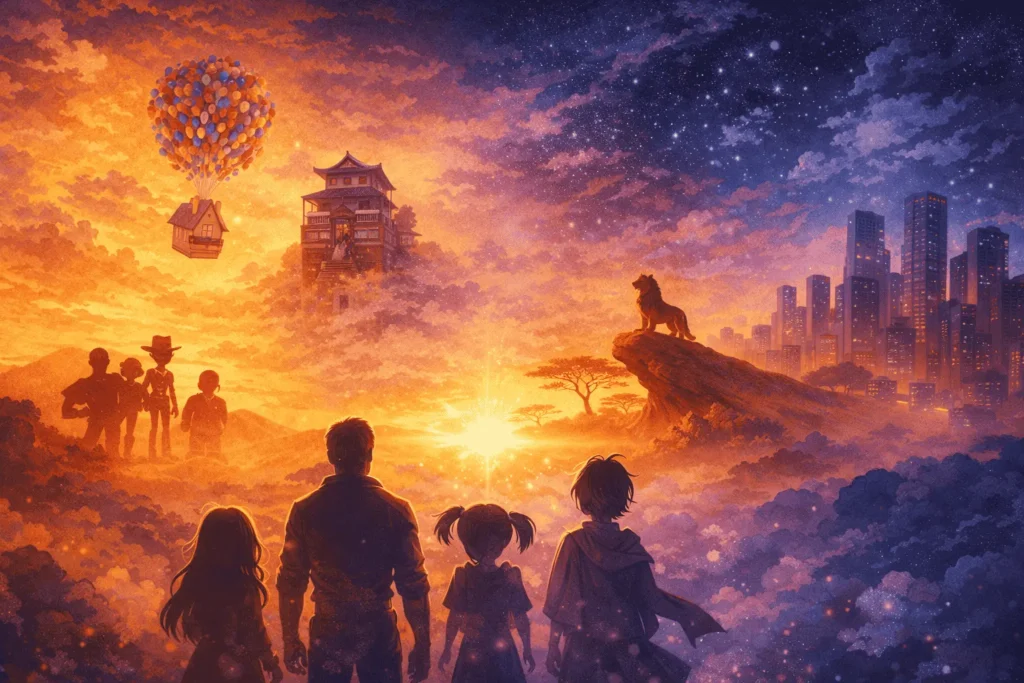
Animation has evolved from a novelty entertainment format into one of cinema’s most powerful storytelling mediums. The top 10 best animated movies transcend age demographics, delivering complex narratives, breathtaking artistry, and emotional depth that rivals any live-action film. From hand-drawn masterpieces that required thousands of individual paintings to cutting-edge computer-generated imagery, animated films have consistently pushed the boundaries of what’s possible in visual storytelling.
The cultural significance of animated movies extends far beyond box office numbers. Films like Spirited Away have won Academy Awards and introduced Western audiences to Japanese anime traditions. Pixar revolutionized computer animation while proving that family films could engage adult audiences with sophisticated themes. Disney classics defined childhood for multiple generations, while independent animators demonstrated that the medium could address mature, philosophical subjects.
Understanding what makes certain animated films truly exceptional requires looking beyond technical achievement or commercial success. The greatest animated movies combine visual innovation with narrative substance, creating experiences that resonate across cultures and generations. They prove that animation isn’t a genre—it’s a limitless medium capable of telling any story imaginable.
This ranking examines the top animated movies through multiple critical lenses: artistic innovation, storytelling impact, cultural influence, and lasting legacy. These films haven’t just entertained millions—they’ve redefined what animation can achieve as an art form.
How We Ranked the Top Animated Movies
Evaluating the best animated films of all time requires a comprehensive framework that accounts for both objective achievement and subjective cultural impact.
Storytelling and Narrative Depth: Does the film tell a compelling story that works on multiple levels? Are characters developed with complexity and nuance? Does the narrative engage both children and adults meaningfully?
Visual Innovation and Animation Quality: Did the film advance animation techniques? Is the visual style distinctive and memorable? Does the animation serve the story effectively rather than existing purely for spectacle?
Cultural and Generational Impact: How did the film influence popular culture, the animation industry, or audience expectations? Has it maintained relevance across decades? Did it introduce new storytelling approaches or cultural perspectives?
Critical Reception and Audience Legacy: What recognition did the film receive from critics, industry professionals, and award bodies? Has audience appreciation grown over time? Do filmmakers cite it as influential?
Global Significance: Great animation emerges from multiple countries and traditions. This ranking includes Western animation, Japanese anime, and independent works that represent animation’s international scope.
Top 10 Best Animated Movies of All Time
1. Spirited Away (Studio Ghibli/Hayao Miyazaki, 2001)
Hayao Miyazaki’s masterpiece remains the highest-grossing film in Japanese history and the only anime movie to win the Academy Award for Best Animated Feature during a highly competitive year that included Lilo & Stitch and Ice Age.
Animation Style: Hand-drawn traditional animation with watercolor-inspired backgrounds
Core Themes:
- Coming of age and identity
- Environmental consciousness
- Work ethics and perseverance
- Cultural preservation vs. modernization
Spirited Away follows ten-year-old Chihiro as she navigates a mysterious spirit world to save her parents. Miyazaki crafts a visually stunning universe filled with imaginative creatures drawn from Japanese folklore, rendered with meticulous detail that rewards repeat viewings. The film’s pacing deliberately differs from Western animation, allowing contemplative moments that create space for emotional resonance.
The movie’s cultural significance extends beyond its technical achievements. It introduced global audiences to Studio Ghibli’s distinctive storytelling approach and demonstrated that anime could achieve mainstream Western success without compromising artistic vision. Critics praised its environmental themes and strong female protagonist, while audiences connected with its universal story of courage and growth.
2. Toy Story (Pixar/John Lasseter, 1995)
The first feature-length computer-animated film fundamentally changed cinema history. Toy Story proved that CGI animation could sustain a full narrative while delivering emotional depth that exceeded expectations for “children’s entertainment.”
Animation Style: Pioneering computer-generated imagery
Core Themes:
- Friendship and loyalty
- Identity and purpose
- Fear of obsolescence
- Change and acceptance
Pixar’s groundbreaking film introduced Woody and Buzz Lightyear, creating characters whose relationship anchored a story about jealousy, belonging, and redemption. The screenplay’s sophistication appealed to adults while maintaining accessibility for children—a balance that would define Pixar’s approach for decades.
The technical achievement cannot be overstated. Toy Story required developing entirely new animation software and rendering techniques. Its success launched Pixar’s dominance in animation and inspired every major studio to develop CGI animation divisions. The film spawned three sequels, each critically acclaimed, with Toy Story 3 earning an Academy Award nomination for Best Picture—a rare honor for animated films.
3. Princess Mononoke (Studio Ghibli/Hayao Miyazaki, 1997)
Before Spirited Away, Miyazaki created this epic environmental fantasy that challenged conventional animated storytelling with its moral complexity and stunning violence.
Animation Style: Hand-drawn animation with early digital compositing
Core Themes:
- Environmentalism vs. industrialization
- Moral ambiguity
- Human-nature relationships
- Consequences of conflict
Princess Mononoke presents a conflict between forest gods and human iron miners with no clear villains—a sophisticated approach rarely seen in animated movies. The film’s ecological message resonated globally, while its Japanese cultural specificity enriched rather than limited its appeal.
Roger Ebert named it one of the best films of 1999, praising its refusal to simplify complex environmental and ethical questions. The film demonstrated that animated movies could address mature philosophical themes without compromising their visual artistry or narrative integrity.
4. WALL-E (Pixar/Andrew Stanton, 2008)
Pixar’s boldest artistic experiment featured almost forty minutes of dialogue-free storytelling, relying purely on visual narrative and character animation to convey a robot’s lonely existence on abandoned Earth.
Animation Style: Photorealistic computer animation
Core Themes:
- Environmental destruction and consumerism
- Loneliness and connection
- Corporate control
- Hope and renewal
WALL-E functions as both environmental parable and tender love story. The film’s opening act showcases animation’s capacity for pure visual storytelling, with the titular robot’s personality conveyed entirely through movement, sound design, and mechanical expressions. When humans appear, the film transitions into sharp social satire about technological dependence and physical atrophy.
The movie earned widespread critical acclaim for its artistic ambition and thematic depth. Many critics compared it to silent film classics, noting that its willingness to trust audience intelligence elevated animated cinema’s artistic reputation.
5. The Lion King (Disney/Roger Allers & Rob Minkoff, 1994)
Disney’s Renaissance period peaked with this Shakespearean tale set in the African savanna. The Lion King became the highest-grossing traditionally animated film ever released, earning over $960 million worldwide.
Animation Style: Traditional hand-drawn animation with computer-assisted sequences
Core Themes:
- Responsibility and destiny
- Circle of life and death
- Redemption and forgiveness
- Family legacy
The film’s narrative borrows heavily from Hamlet, creating a coming-of-age story with genuine dramatic weight. Elton John’s musical score and Hans Zimmer’s orchestration enhanced emotional resonance, with songs like “Circle of Life” and “Can You Feel the Love Tonight” becoming cultural touchstones.
The Lion King demonstrated animation’s capacity for epic storytelling. The wildebeest stampede sequence remains a technical marvel, combining hand-drawn character animation with computer-generated crowd simulation. The film’s cultural impact includes a Tony Award-winning Broadway adaptation and continued relevance across multiple generations.
6. Your Name (CoMix Wave Films/Makoto Shinkai, 2016)
This romantic fantasy anime became the highest-grossing anime movie worldwide until Demon Slayer surpassed it in 2020. Makoto Shinkai’s visually stunning film introduced his distinctive aesthetic to global audiences.
Animation Style: Digital animation with photorealistic backgrounds
Core Themes:
- Connection across time and space
- Memory and identity
- Natural disaster and cultural trauma
- Fate and choice
Your Name follows two teenagers who mysteriously swap bodies, intertwining their lives across time. Shinkai’s signature style features impossibly beautiful landscapes and lighting effects that elevate everyday settings into poetry. The film’s emotional climax resonated particularly with Japanese audiences familiar with earthquake trauma, while universal themes of connection and longing crossed cultural boundaries.
The movie’s commercial and critical success demonstrated anime’s growing global mainstream acceptance. It earned recognition beyond traditional anime audiences, playing in mainstream theaters worldwide and sparking increased interest in contemporary Japanese animation.
7. Beauty and the Beast (Disney/Gary Trousdale & Kirk Wise, 1991)
The first animated film nominated for the Academy Award for Best Picture, Beauty and the Beast represented the pinnacle of Disney’s Renaissance era and validated animation as serious cinema.
Animation Style: Traditional hand-drawn animation with groundbreaking CGI ballroom sequence
Core Themes:
- Looking beyond appearances
- Redemption through love
- Intelligence and independence
- Breaking societal expectations
The film’s sophisticated narrative, memorable characters, and Alan Menken’s Broadway-style score created a modern fairy tale that appealed across demographics. Belle became Disney’s most intellectually curious princess, while the Beast’s transformation arc provided genuine character development. The ballroom dance sequence pioneered the integration of computer-generated environments with traditional character animation.
Beauty and the Beast influenced animation’s critical reception, proving that animated movies deserved consideration alongside prestigious live-action films. Its success paved the way for animation’s eventual recognition as a legitimate art form rather than children’s entertainment.
8. Finding Nemo (Pixar/Andrew Stanton, 2003)
Pixar’s underwater adventure combined technical breakthroughs in water simulation with a powerful story about parental love, disability representation, and overcoming limitations.
Animation Style: Computer animation with groundbreaking water effects
Core Themes:
- Parental love and letting go
- Disability and capability
- Fear and courage
- Trust and independence
The film’s emotional opening establishes genuine stakes, while Marlin’s journey to find his son explores themes of overprotection and growth. Dory, voiced by Ellen DeGeneres, became one of animation’s most beloved characters, with her short-term memory loss portrayed sensitively rather than as comic relief alone.
Finding Nemo‘s technical achievement in rendering realistic underwater environments set new industry standards. The film earned the Academy Award for Best Animated Feature and became Pixar’s most commercially successful original property, spawning the sequel Finding Dory in 2016.
9. Akira (Tokyo Movie Shinsha/Katsuhiro Ōtomo, 1988)
This cyberpunk masterpiece introduced Western audiences to anime’s potential for mature, philosophically complex storytelling. Akira influenced countless filmmakers and established anime as a serious artistic medium beyond children’s cartoons.
Animation Style: Hand-drawn animation with unprecedented detail and fluid motion
Core Themes:
- Power and corruption
- Urban decay and reconstruction
- Adolescence and identity
- Government control vs. individual freedom
Set in post-apocalyptic Neo-Tokyo, Akira presents a dystopian vision of technological advancement without ethical constraints. The film’s animation quality exceeded Western animation standards of its era, featuring detailed backgrounds, complex action sequences, and adult-oriented content rarely seen in animated features.
The movie’s influence on science fiction cinema is immeasurable. Filmmakers from The Matrix to Stranger Things cite Akira as inspiration. It demonstrated that anime could tackle complex philosophical questions while maintaining stunning visual artistry, opening Western markets to Japanese animation.
10. Up (Pixar/Pete Docter, 2009)
Pixar’s emotional masterpiece opens with one of cinema’s most affecting sequences—a wordless montage depicting a lifetime of love and loss that establishes profound emotional stakes before the adventure begins.
Animation Style: Computer animation with stylized character design
Core Themes:
- Grief and moving forward
- Unlikely friendship
- Adventure vs. reality
- Fulfilling dreams and letting go
The film’s first ten minutes tell a complete love story, showcasing animation’s capacity for visual storytelling that communicates complex emotions without dialogue. Carl’s journey from grief-stricken widower to caring father figure provides genuine character development, while Russell’s earnest optimism creates an unlikely friendship that forms the story’s emotional core.
Up earned Academy Award nominations for Best Picture and Best Original Screenplay—rare recognition for animated films. Critics praised its emotional sophistication and willingness to address aging, death, and loss in ways accessible to children while resonating deeply with adults.
The Enduring Power of Animated Cinema
The top animated movies of all time share essential qualities that transcend their technical approaches or cultural origins. They use animation’s limitless visual possibilities to tell stories that couldn’t be told as effectively in live-action. They trust their audiences—both children and adults—to engage with complex themes and emotional depth. They advance the medium technically while remaining grounded in strong narrative fundamentals.
These films prove that animation deserves recognition as a premiere storytelling medium rather than a niche genre. From Miyazaki’s hand-drawn environmental parables to Pixar’s computer-generated emotional journeys, from Disney’s Broadway-inspired musical narratives to Japanese anime’s philosophical complexity, animation offers storytelling possibilities limited only by imagination.
As technology continues evolving and global audiences grow more interconnected, animated movies will continue pushing artistic boundaries while maintaining the universal appeal that makes them accessible across cultures and generations. The films on this list represent not just the best of what animation has achieved, but a promise of what the medium will continue to offer.
FAQ’s:
What are the top animated movies of all time?
The top animated movies of all time include Spirited Away (2001), Toy Story (1995), Princess Mononoke (1997), WALL-E (2008), The Lion King (1994), Your Name (2016), Beauty and the Beast (1991), Finding Nemo (2003), Akira (1988), and Up (2009). These films are recognized for their storytelling excellence, technical innovation, cultural impact, and critical acclaim from both audiences and industry professionals.
What is the best anime movie ever made?
Spirited Away (2001) by Hayao Miyazaki is widely considered the best anime movie ever made. It won the Academy Award for Best Animated Feature, remains the highest-grossing film in Japanese history, and has earned universal critical acclaim for its storytelling, animation quality, and cultural significance. Other contenders include Princess Mononoke (1997), Akira (1988), and Your Name (2016).
What animated movie has won the most awards?
Spirited Away holds the distinction of being the only anime movie to win the Academy Award for Best Animated Feature during a competitive year, and it won numerous international awards. Beauty and the Beast (1991) was the first animated film nominated for the Academy Award for Best Picture. Up (2009) received nominations for both Best Picture and Best Original Screenplay, showcasing animation’s growing recognition in mainstream cinema.
What was the first computer-animated movie?
Toy Story (1995) was the first feature-length computer-animated movie. Created by Pixar Animation Studios and directed by John Lasseter, it revolutionized the animation industry and proved that CGI could sustain a full narrative with emotional depth. The film’s success launched the modern era of computer animation and established Pixar as an industry leader.
Why are Studio Ghibli movies so highly rated?
Studio Ghibli movies, particularly those directed by Hayao Miyazaki, are highly rated because they combine stunning hand-drawn animation with sophisticated storytelling that appeals to all ages. They feature strong character development, environmental and philosophical themes, cultural authenticity, and visual artistry that rewards repeat viewings. Films like Spirited Away and Princess Mononoke avoid simplistic morality in favor of complex narratives that respect audience intelligence.
Are animated movies just for children?
No. While many animated movies are family-friendly, the medium is capable of telling any story and addressing any theme. Films like Akira, WALL-E, and Princess Mononoke tackle mature philosophical questions, environmental concerns, and complex moral issues. The Academy Awards and major film festivals increasingly recognize animation as a legitimate art form deserving critical analysis alongside live-action cinema.
What makes a great animated movie?
Great animated movies combine compelling storytelling with visual innovation. They use animation’s unique capabilities to enhance narrative rather than simply providing spectacle. The best films feature strong character development, emotional resonance, thematic depth, and technical craftsmanship. They appeal across age groups and cultures, maintaining relevance beyond their release date. Films like Toy Story, Spirited Away, and Up demonstrate these qualities through universal themes executed with artistic excellence.
Read More: Who Is the Most Powerful Anime Character? A Definitive Analysis
Read More: Who Is the Strongest Anime Character? Best Analysis By Toonstream 2026