Who Is the Most Powerful Anime Character? A Definitive Analysis
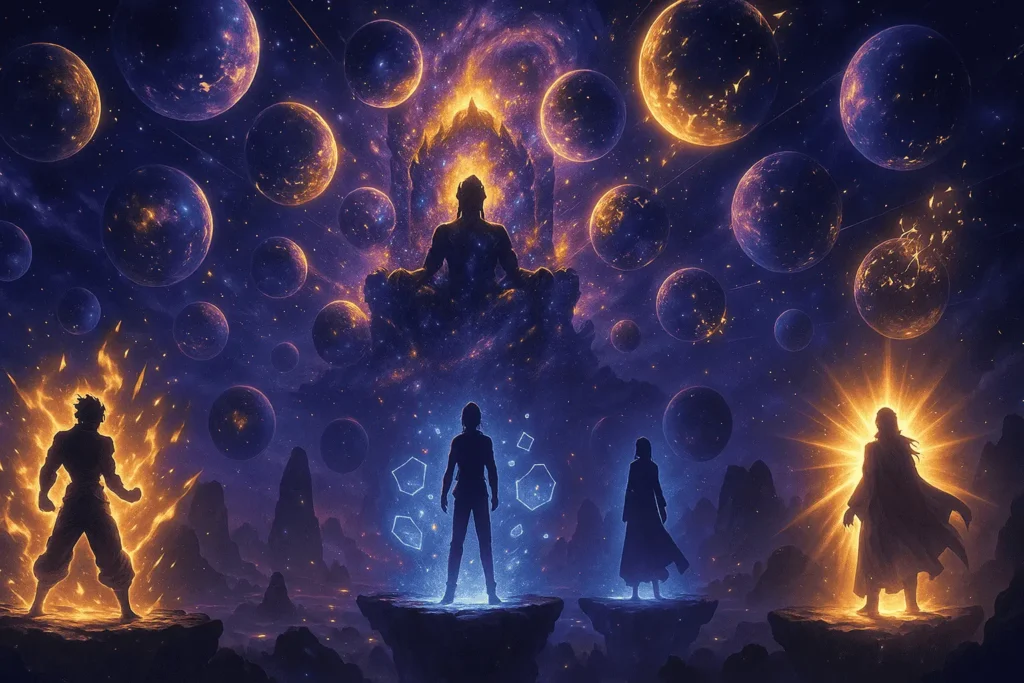
Determining the most powerful anime character requires understanding what “power” means across different anime universes. Power encompasses physical strength, reality manipulation, conceptual erasure, omnipotence, and abilities that transcend dimensional boundaries.
Quick Answer: The most powerful anime character is debated between Zeno from Dragon Ball Super (universal erasure), The Truth from Fullmetal Alchemist (absolute knowledge), and Featherine Augustus Aurora from Umineko (narrative control). Each dominates their respective cosmology through fundamentally different power expressions.
This guide analyzes power-scaling systems, compares god-tier entities, and examines canonical evidence to identify anime’s supreme beings.
Understanding Anime Power Scaling Systems
What Defines Power in Anime?
Anime power exists across multiple categories:
Physical Power Categories:
- Destructive capacity (planetary, universal, multiversal)
- Combat speed and reaction time
- Durability and regeneration
Metaphysical Power Categories:
- Reality warping and causality manipulation
- Conceptual erasure and existence negation
- Omniscience and omnipresence
- Narrative transcendence
Hax Abilities:
- Time manipulation and temporal control
- Probability alteration
- Death manipulation
- Information control
Power-scaling methodology considers both demonstrated feats and stated cosmological hierarchies within each anime’s established rules.
Top Criteria for Determining the Most Powerful Anime Character
1. Canonical Feats vs Statements
Demonstrated abilities carry more weight than character statements. A character erasing universes on-screen ranks higher than claims of infinite power without evidence.
2. Cosmological Scale
The size and complexity of the anime universe matters:
- Single universe settings
- Multiverse with infinite timelines
- Higher-dimensional spaces
- Meta-narrative layers
3. Nature of Abilities
Some powers fundamentally trump others:
- Existence erasure > physical destruction
- Causality manipulation > time manipulation
- Narrative control > reality warping
4. Limitations and Weaknesses
Even god-tier characters often have restrictions:
- Sealed powers requiring conditions
- Vulnerability to specific abilities
- Dimensional or conceptual boundaries
Read More: 20 Must-Watch Anime on ToonStream for Beginners
The Ultimate Contenders: God-Tier Anime Characters
Zeno (Dragon Ball Super)
Power Level: Multiversal+
Key Abilities:
- Instant erasure of entire universes
- Existence removal of immortal beings
- No demonstrated combat skill needed
- Cannot be opposed by any being in his cosmology
Why He’s a Contender: Zeno erased six universes before the series began and casually destroyed Future Trunks’ entire timeline, including an immortal fusion. His power operates on pure existential authority rather than energy or technique.
Limitation: Limited to his cosmology; cannot interact with meta-narrative levels.
Featherine Augustus Aurora (Umineko When They Cry)
Power Level: Outerversal/Narrative
Key Abilities:
- Complete control over narrative causality
- Exists beyond dimensional hierarchies
- Can rewrite story logic and character existence
- Transcends the concept of plot itself
Why She’s a Contender: Featherine exists at the highest layer of Umineko’s reality hierarchy, where beings treat entire universes as fiction. She can edit stories, remove characters from existence retroactively, and exists beyond concepts like life, death, and dimensionality.
Limitation: Powers function within the Umineko cosmological framework.
The Truth (Fullmetal Alchemist: Brotherhood)
Power Level: Universal Absolute
Key Abilities:
- Omniscient knowledge of all alchemy
- Exists as the universe’s consciousness
- Controls the Gate connecting all existence
- Cannot be destroyed or opposed
Why He’s a Contender: The Truth represents absolute knowledge and the universe’s fundamental structure. Every being returns to this entity. It demonstrates perfect understanding of all existence within its universe and operates on philosophical absolute principles.
Limitation: Single universe entity; powers don’t extend beyond FMA cosmology.
Saitama (One-punch Man)
Power Level: Undefined/Potentially Limitless
Key Abilities:
- Removed his “limiter” through training
- Growth rate that surpasses any opponent
- Survived in space, time-traveled after mastering new techniques
- Zero-casualty serious punch that reversed causality
Why He’s Debated: Saitama’s narrative role as a parody character creates unique scaling debates. His exponential growth during the Garou fight and ability to grab and redirect hyperspace gates suggest potential beyond normal physical limits.
Limitation: Feats remain primarily physical; lacks reality warping or conceptual abilities.
Anos Voldigoad (The Misfit of Demon King Academy)
Power Level: Multiversal+
Key Abilities:
- Destroys and recreates his source (concept of existence)
- Venuzdonoa destroys all reason and logic
- Exists after complete conceptual erasure
- Resurrection and adaptation to any ability
Why He’s a Contender: Anos operates on conceptual destruction, where his sword eliminates the “reason” for things to exist. He survives destruction of his fundamental concept and adapts to powers designed to counter him.
Limitation: Powers tested within specific cosmological framework.
Kami Tenchi (Tenchi Muyo!)
Power Level: Omniversal
Key Abilities:
- Supreme being of all Tenchi dimensions
- Created three supreme goddesses
- Exists beyond dimensional physics
- Omnipotent within the Tenchi cosmology
Why He’s a Contender: Kami Tenchi represents the absolute pinnacle of his universe’s hierarchy, transcending beings who already exist in higher dimensions beyond space-time.
Limitation: Limited appearances make comprehensive scaling difficult.
Canon vs Non-Canon Power Levels
Why Canon Matters
Canon sources (original manga, anime series by original creators) provide reliable scaling. Non-canon material (movies, games, alternative timelines) often inflates power for entertainment without cosmological consistency.
Canon Hierarchy Example: Dragon Ball
- Canon: Zeno erases universes; Grand Priest serves him
- Non-Canon: Xeno Goku from games has multiversal+ feats exceeding main continuity
For accurate ranking, this analysis prioritizes canon material while acknowledging non-canon interpretations exist.
Shonen vs Seinen vs Isekai: Power Scaling Differences
Shonen Battle Manga
Focus on measurable growth and competitive hierarchies. Power often caps at universal levels (Dragon Ball, Naruto, Bleach).
Seinen Series
Emphasize psychological complexity and conceptual abilities. Power may be subtle but absolute within defined rules (Death Note, Monster).
Isekai/Light Novel Adaptations
Frequently include reality-breaking abilities and meta-powers. Characters often possess system-level control or narrative manipulation (Overlord, Re:Zero, Misfit of Demon King Academy).
Different genres prioritize different power expressions, making cross-genre comparison complex but fascinating.
Reality Warpers vs Physical Powerhouses
The Fundamental Divide
Physical Powerhouses:
- Goku (Dragon Ball)
- All Might (My Hero Academia)
- Might Guy (Naruto)
Excel at combat, speed, and destructive capacity but operate within physical laws.
Reality Warpers:
- Haruhi Suzumiya (subconscious universal recreation)
- Altair (Re:Creators – narrative materialization)
- Accelerator (A Certain Magical Index – vector control)
Manipulate fundamental forces, making traditional combat irrelevant.
Winner: Reality manipulation typically supersedes physical power because it can negate, redirect, or redefine physical attacks before they occur.
Omnipotent Characters: Do They Exist in Anime?
True Omnipotence Defined
True omnipotence means:
- Unlimited power without restriction
- Ability to create logical paradoxes
- Absolute authority over all existence
Anime’s Approach
Most “omnipotent” anime characters are actually:
- Nigh-omnipotent: Vastly powerful within their cosmology
- Contextually supreme: Unbeatable in their narrative
Even Zeno has limitations (cannot restore what he erases). The Truth knows everything but doesn’t actively manipulate events. Featherine is restricted to her narrative hierarchy.
Conclusion: Anime presents functionally supreme beings rather than philosophically true omnipotence.
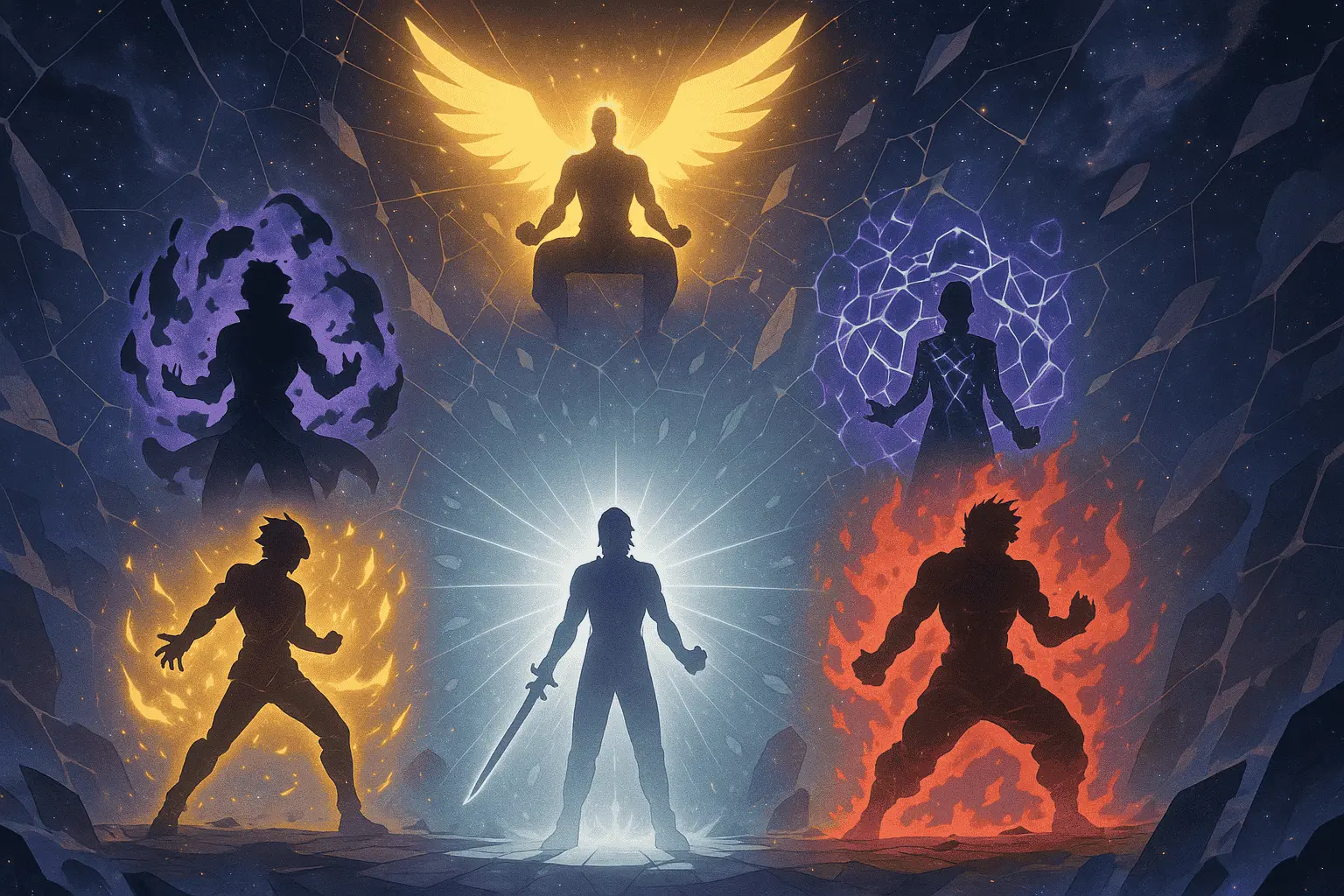
Comparison Table: Top 5 Most Powerful Characters
| Character | Series | Power Type | Scale | Key Feat |
|---|---|---|---|---|
| Zeno | Dragon Ball Super | Existential Erasure | Multiversal | Erased 6 universes instantly |
| Featherine Augustus Aurora | Umineko | Narrative Control | Outerversal | Exists beyond plot itself |
| The Truth | FMA: Brotherhood | Absolute Knowledge | Universal Conceptual | Embodies universal consciousness |
| Anos Voldigoad | Misfit Demon King | Logic Destruction | Multiversal+ | Sword destroys reason itself |
| Kami Tenchi | Tenchi Muyo! | Omniversal Authority | Beyond Dimensional | Created supreme goddesses |
Why This Question Has No Single Answer
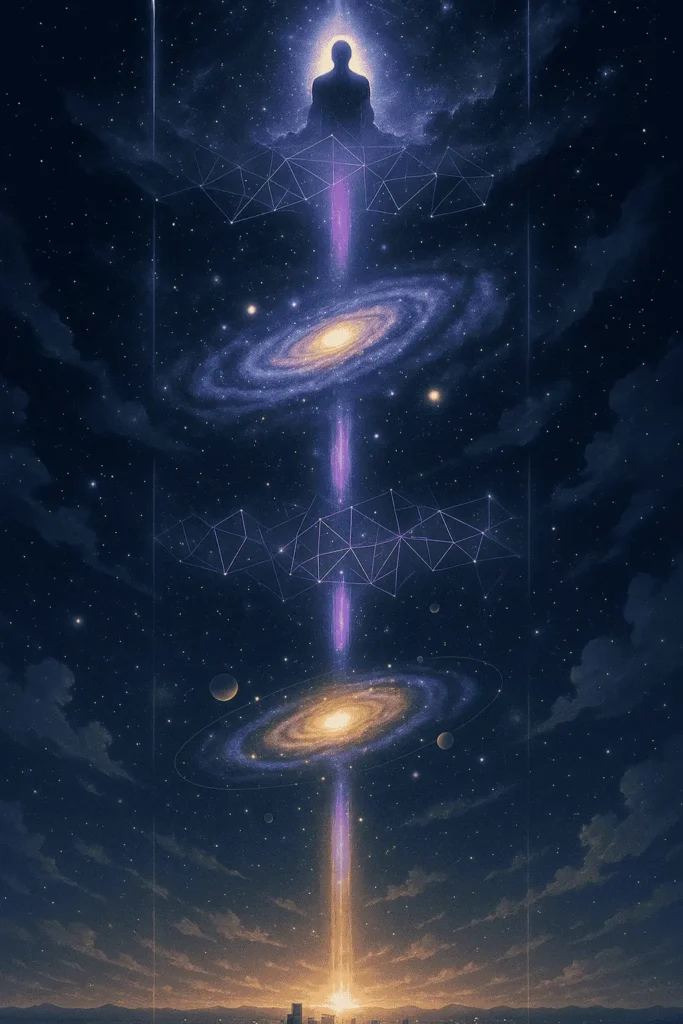
Cosmological Incompatibility
Characters exist in universes with different physical laws, metaphysical systems, and dimensional hierarchies. Zeno’s erasure ability functions within Dragon Ball’s cosmology. Featherine’s narrative control operates in Umineko’s layered reality. Direct comparison requires impossible assumptions about which system’s rules would apply.
Narrative Function
Some characters are designed as absolute within their context:
- Zeno exists as plot device for ultimate authority
- Saitama functions as comedy through invincibility
- The Truth represents philosophical absolute
Comparing narrative functions across stories creates paradoxes.
Feat vs Potential Debate
Should rankings prioritize:
- Demonstrated feats (what they’ve done)?
- Stated potential (what they could do)?
- Narrative role (what they represent)?
Different methodologies produce different conclusions.
The Verdict: Who Is the Most Powerful?
By Demonstrated Feats
Winner: Zeno Erasing multiple universes effortlessly represents the highest concrete destructive feat in mainstream anime.
By Conceptual Authority
Winner: Featherine Augustus Aurora Operating beyond narrative layers transcends physical destruction.
By Narrative Design
Winner: Saitama Exists as meta-commentary on the concept of limitless strength.
Overall Conclusion
Featherine Augustus Aurora holds the strongest claim due to her position beyond dimensional physics and narrative structure itself, but this remains debatable based on how one defines power.
The beauty of anime lies in each series creating unique power expressions that make definitive ranking both impossible and endlessly fascinating.
Frequently Asked Questions
Who is the strongest anime character of all time?
The strongest anime character is debated between Zeno (Dragon Ball Super) for multiversal erasure, Featherine Augustus Aurora (Umineko) for narrative transcendence, and The Truth (Fullmetal Alchemist) for absolute universal consciousness. Each dominates their cosmology through fundamentally different power types.
Can Goku beat the most powerful anime character?
Goku cannot defeat characters like Zeno, Featherine, or The Truth. While Goku possesses extraordinary combat ability and universal destructive capacity, these beings operate on existential, narrative, or conceptual levels that transcend physical combat entirely.
What is anime power scaling?
Anime power scaling is the methodology of comparing character abilities across different series using demonstrated feats, cosmological scale, and established universe rules. It considers destructive capacity, hax abilities, speed, and dimensional hierarchy to create relative power rankings.
Is Saitama the most powerful anime character?
Saitama is not definitively the most powerful, despite his narrative role as invincible. Characters like Zeno (universal erasure), Anos (conceptual destruction), and reality warpers possess abilities that operate beyond physical strength, which is Saitama’s primary domain.
What’s the difference between omnipotent and nigh-omnipotent?
Omnipotent means truly unlimited power with no restrictions. Nigh-omnipotent means vastly powerful within specific cosmological boundaries. Most anime “gods” are nigh-omnipotent, displaying supreme authority in their universe but with subtle limitations.
Do anime characters have plot armor?
Plot armor refers to characters surviving based on narrative necessity rather than logical power scaling. While common in anime, serious power-scaling discussions focus on demonstrated canonical abilities rather than story convenience.
How powerful is Zeno compared to other gods?
Zeno is the supreme being in Dragon Ball’s cosmology, capable of erasing Gods of Destruction, Angels, and entire universes instantly. However, comparing him to “gods” from other anime requires understanding each series’ cosmological framework.
Can reality warpers beat physical fighters?
Reality warpers typically defeat pure physical fighters because they can manipulate the fundamental rules governing physical combat. Powers like time manipulation, causality control, or existence erasure bypass conventional durability and strength.