Best Anime Movies: Timeless Classics, Modern Hits & 2026 Picks
Anime movies represent the pinnacle of Japanese animation artistry, combining technical mastery with emotional depth that transcends cultural boundaries. Unlike weekly television series constrained by production schedules and episodic formats, theatrical anime films allow creators the time, budget, and creative freedom to craft complete narrative experiences with unprecedented visual polish and thematic sophistication.
The best anime movies have consistently demonstrated animation’s capacity for serious artistic expression. Films like Spirited Away won Academy Awards, Akira influenced global science fiction cinema, and works by directors like Satoshi Kon expanded understanding of animation’s narrative possibilities. These aren’t simply “cartoons”—they’re cinematic achievements that demand recognition alongside prestigious live-action films.
The landscape of anime cinema continues evolving. Studio Ghibli’s hand-drawn masterpieces coexist with cutting-edge digital animation from studios like CoMix Wave Films and Science SARU. Streaming platforms now premiere original anime movies alongside theatrical releases, democratizing access while maintaining artistic ambition. As we move through 2026, anime films continue pushing creative boundaries while honoring the medium’s rich theatrical tradition.
This comprehensive guide explores the best anime movies across eras and styles—from timeless classics that defined the medium to contemporary works shaping its future. Whether you’re discovering anime cinema for the first time or seeking your next masterpiece, these selections represent the highest achievements in animated storytelling.
How the Best Anime Movies Are Selected
Evaluating anime films requires considering multiple dimensions that distinguish truly exceptional works from merely entertaining ones.
Storytelling Depth and Narrative Structure: Does the film utilize cinema’s unique storytelling possibilities? Are themes explored with complexity appropriate to the medium? Does the narrative justify theatrical format rather than feeling like extended television episodes?
Animation Quality and Artistic Direction: What level of technical craftsmanship does the animation demonstrate? Is the visual style distinctive and purposeful? Does the art direction enhance emotional and thematic resonance?
Cultural Impact and Global Recognition: Has the film influenced other creators, expanded anime’s audience, or achieved mainstream recognition? Did it earn critical acclaim from film festivals, awards bodies, or international media?
Emotional Resonance and Thematic Maturity: Does the film create genuine emotional connections? Are themes explored with sophistication that respects audience intelligence? Does it offer meaningful insights or perspectives?
Longevity and Influence: Has the film maintained relevance across years or decades? Do new audiences continue discovering it? Has it influenced subsequent anime productions or broader animation trends?
Modern Accessibility: Is the film available through contemporary streaming platforms or physical media? Does it remain culturally relevant to current audiences, including anime movies 2026 viewers?
Best Anime Movies to Watch
Spirited Away (Studio Ghibli/Hayao Miyazaki, 2001)
Hayao Miyazaki’s masterwork remains anime cinema’s most internationally celebrated achievement, winning the Academy Award for Best Animated Feature and becoming the highest-grossing film in Japanese history.
Target Audience: General audiences, families, all ages
Core Themes:
- Coming-of-age and identity
- Environmental consciousness
- Work ethic and perseverance
- Cultural tradition vs. modernization
Visual Style: Hand-drawn traditional animation with watercolor-inspired backgrounds and meticulous detail
Ten-year-old Chihiro must navigate a mysterious spirit world to save her parents, encountering imaginative creatures drawn from Japanese folklore. Miyazaki’s world-building creates a fully realized universe that rewards repeat viewings, while the protagonist’s emotional journey resonates universally despite cultural specificity.
Spirited Away introduced global audiences to Studio Ghibli’s distinctive storytelling philosophy—patient pacing, environmental themes, strong female protagonists, and refusal to simplify moral complexity. Its influence on Western animation and continued popularity twenty-plus years after release cement its status among the best anime movies ever created.
Your Name (CoMix Wave Films/Makoto Shinkai, 2016)
Makoto Shinkai’s romantic fantasy became the highest-grossing anime film worldwide until surpassed by Demon Slayer: Mugen Train, demonstrating anime cinema’s growing global commercial viability.
Target Audience: Teens and adults, romance fans
Core Themes:
- Connection across time and space
- Memory and identity
- Natural disaster and cultural trauma
- Fate and choice
Visual Style: Digital animation with photorealistic backgrounds and distinctive lighting effects
Two teenagers mysteriously swap bodies, intertwining their lives across time in ways they don’t initially understand. Shinkai’s signature aesthetic—impossibly beautiful landscapes and lighting that transforms everyday settings—elevates a time-bending romance into visual poetry. The film’s emotional climax resonated particularly with Japanese audiences familiar with earthquake trauma while universal themes crossed cultural boundaries.
Your Name proved contemporary anime films could achieve mainstream global success beyond Studio Ghibli, expanding international audiences and influencing streaming platform investments in anime movies 2026 and beyond.
Akira (Tokyo Movie Shinsha/Katsuhiro Ōtomo, 1988)
This cyberpunk landmark revolutionized Western perceptions of anime, demonstrating the medium’s capacity for mature, philosophically complex storytelling with unprecedented technical achievement.
Target Audience: Adults, science fiction fans
Core Themes:
- Power and corruption
- Urban decay and reconstruction
- Adolescent identity and rage
- Government control vs. individual freedom
Visual Style: Hand-drawn animation with exceptional detail and fluid motion
Set in post-apocalyptic Neo-Tokyo, Akira presents dystopian visions of technological advancement without ethical constraints. The film’s animation quality exceeded Western standards of its era, featuring complex action sequences, detailed backgrounds, and adult-oriented content rarely seen in theatrical animation.
Akira‘s influence on science fiction cinema is immeasurable. Filmmakers from The Matrix to Stranger Things cite it as inspiration. The movie demonstrated anime could tackle complex philosophical questions while maintaining stunning visual artistry, opening Western markets to Japanese animation and establishing anime as legitimate artistic cinema.
Perfect Blue (Madhouse/Satoshi Kon, 1997)
Satoshi Kon’s psychological thriller showcased anime’s capacity for sophisticated adult narratives, influencing filmmakers including Darren Aronofsky and Christopher Nolan.
Target Audience: Adults, psychological thriller fans
Core Themes:
- Identity and public persona
- Celebrity culture and obsession
- Reality vs. perception
- Female agency in entertainment industries
Visual Style: Realistic character designs with surreal editing and perspective shifts
Perfect Blue follows a pop idol transitioning to acting while being stalked, blurring boundaries between reality and delusion through innovative editing techniques. Kon’s use of match cuts, perspective manipulation, and unreliable narration created cinematic language that live-action directors later adopted.
The film remains startlingly relevant to contemporary discussions about celebrity, social media, and parasocial relationships. Its mature themes and psychological complexity demonstrate that the best anime movies address adult concerns with sophistication rivaling any medium.
Princess Mononoke (Studio Ghibli/Hayao Miyazaki, 1997)
Before Spirited Away, Miyazaki created this epic environmental fantasy that challenged conventional animated storytelling with moral ambiguity and stunning violence.
Target Audience: Teens and adults
Core Themes:
- Environmentalism vs. industrialization
- Moral complexity and shades of gray
- Human-nature relationships
- Consequences of conflict
Visual Style: Hand-drawn animation with early digital compositing for epic scale
Princess Mononoke presents conflict between forest gods and human iron miners with no clear villains—sophisticated moral complexity rarely attempted in animated films. The movie’s ecological message resonated globally while Japanese cultural specificity enriched rather than limited appeal.
Roger Ebert named it among the decade’s best films, praising its refusal to simplify environmental and ethical questions. The film demonstrated that good anime movies could address mature philosophical themes without compromising visual artistry or narrative integrity.
Grave of the Fireflies (Studio Ghibli/Isao Takahata, 1988)
Isao Takahata’s devastating war drama stands among cinema’s most powerful anti-war statements, proving animation’s capacity for profound tragedy and historical reflection.
Target Audience: Adults, mature teens (content warning: emotionally intense)
Core Themes:
- War’s impact on civilians
- Sibling love and sacrifice
- Poverty and social abandonment
- Loss and grief
Visual Style: Realistic hand-drawn animation with poetic imagery
Following two siblings struggling to survive wartime Japan, Grave of the Fireflies delivers emotionally devastating realism through animation that enhances rather than softens tragedy. The film’s unflinching portrayal of war’s human cost challenges assumptions about animation’s tonal range.
Critics consistently rank it among the greatest war films regardless of medium. Its emotional impact demonstrates why the best anime movies deserve recognition as serious cinema capable of addressing humanity’s darkest chapters with artistic honesty.
The Girl Who Leapt Through Time (Madhouse/Mamoru Hosoda, 2006)
Mamoru Hosoda’s time-travel romance launched his reputation as one of anime’s premier directors, combining science fiction concepts with coming-of-age authenticity.
Target Audience: Teens and general audiences
Core Themes:
- Consequences of choices
- Cherishing present moments
- First love and friendship
- Time and regret
Visual Style: Digital animation with grounded character designs and expressive movement
When a high school girl discovers she can literally leap through time, she uses this power frivolously before learning actions carry consequences. Hosoda’s direction balances science fiction premises with genuine teenage emotions, creating accessible yet emotionally resonant storytelling.
The film demonstrated that good anime movies could achieve critical and commercial success without relying on established franchises or big-name studios, inspiring independent productions and director-driven projects.
A Silent Voice (Kyoto Animation/Naoko Yamada, 2016)
This powerful drama about bullying, disability, and redemption showcases Kyoto Animation’s exceptional character animation and director Naoko Yamada’s distinctive visual storytelling.
Target Audience: Teens and adults
Core Themes:
- Bullying and its lasting effects
- Disability representation and communication
- Guilt, forgiveness, and redemption
- Mental health and suicide prevention
Visual Style: Digital animation with exceptional character acting and symbolic visual language
A reformed bully seeks redemption by reconnecting with the deaf classmate he tormented. Yamada’s direction uses visual symbolism—characters’ faces obscured by X marks representing social disconnection—to convey internal emotional states. The film addresses heavy themes with sensitivity while maintaining hope.
A Silent Voice earned international acclaim for its mature handling of disability, mental health, and the long-term impacts of bullying, demonstrating anime’s capacity for empathetic, socially conscious storytelling.
Weathering with You (CoMix Wave Films/Makoto Shinkai, 2019)
Makoto Shinkai’s follow-up to Your Name further explored his signature themes of connection and sacrifice through urban fantasy grounded in contemporary Tokyo.
Target Audience: Teens and adults
Core Themes:
- Climate change and environmental crisis
- Class inequality and social systems
- Personal sacrifice vs. societal good
- Young love against impossible odds
Visual Style: Photorealistic digital backgrounds with Shinkai’s distinctive lighting and weather effects
A runaway boy meets a girl who can manipulate weather in a Tokyo experiencing endless rain. Shinkai’s gorgeous visuals—rain-soaked cityscapes, dramatic cloudscapes, impossibly beautiful sunlight—create visual poetry while the narrative explores choosing personal connection over societal expectations.
The film’s environmental themes and urban setting resonated with contemporary audiences, cementing Shinkai’s position among anime cinema’s most visually distinctive directors.
Wolf Children (Studio Chizu/Mamoru Hosoda, 2012)
Hosoda’s tender family drama follows a young mother raising half-wolf children alone, creating a fantastical metaphor for parenting challenges that resonates universally.
Target Audience: General audiences, families
Core Themes:
- Single parenthood and sacrifice
- Identity and belonging
- Urban vs. rural life
- Accepting children’s choices
Visual Style: Warm, expressive digital animation with lush nature scenes
When her werewolf husband dies, a young mother must raise their two half-wolf children alone, navigating social pressures, parenting challenges, and her children’s dual nature. The fantasy premise creates metaphorical space for exploring universal parenting experiences—accepting children’s differences, letting them find their own paths, and unconditional love.
Wolf Children demonstrates how good anime movies use fantastical elements to illuminate deeply human experiences, creating emotional resonance through imaginative storytelling.
Redline (Madhouse/Takeshi Koike, 2009)
This visually explosive racing film represents hand-drawn animation’s most ambitious achievements, requiring seven years and 100,000 hand-drawn frames.
Target Audience: Action fans, animation enthusiasts
Core Themes:
- Passion and determination
- Spectacular visual style over narrative complexity
- Love of speed and competition
Visual Style: Extremely detailed hand-drawn animation with dynamic action and bold colors
Redline prioritizes pure visual spectacle—kinetic racing sequences animated with unprecedented detail and energy. While narrative remains straightforward, the film’s technical achievement and commitment to hand-drawn animation represent animation craftsmanship at its most ambitious.
For viewers seeking the best anime movies showcasing pure animation artistry, Redline delivers uncompromising visual celebration of the medium’s possibilities.
What Are the Best Anime Movies in 2026?
The anime film landscape in 2026 continues expanding with theatrical releases and streaming premieres demonstrating the medium’s ongoing vitality.
Notable Anime Movies 2026 Releases:
Studio Ghibli’s latest film The Boy and the Heron (released late 2023) continues finding new audiences through streaming availability in 2026, maintaining Hayao Miyazaki’s legacy of thoughtful, visually stunning cinema.
Science SARU’s recent productions continue their experimental approach to digital animation, pushing stylistic boundaries while maintaining narrative substance.
Streaming platforms including Netflix, Crunchyroll, and others premiere original anime films targeting global audiences, demonstrating anime cinema’s continued evolution beyond traditional theatrical models.
For current 2026 releases, platforms like MyAnimeList and Anime News Network provide updated information on theatrical premieres and streaming debuts as they become available.
Finding Your Next Favorite Anime Movie
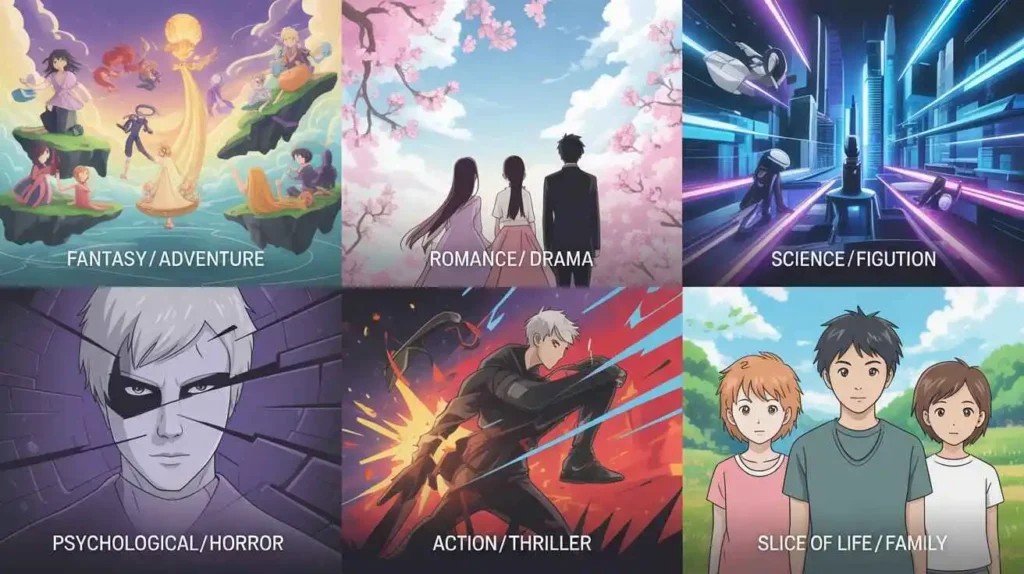
The best anime movies span genres, styles, and tones—from Ghibli’s family-friendly fantasies to Satoshi Kon’s psychological thrillers, from Shinkai’s romantic dramas to action spectacles like Redline. This diversity represents anime cinema’s greatest strength: its refusal to be confined by audience expectations or genre limitations.
For newcomers, starting with critically acclaimed, broadly appealing films like Spirited Away or Your Name provides accessible entry points demonstrating anime’s storytelling range. From there, exploring directors’ filmographies (Miyazaki, Shinkai, Hosoda, Kon) or seeking good anime movies within preferred genres helps navigate anime cinema’s vast catalog.
As streaming platforms expand anime accessibility and new anime movies 2026 continues arriving, the medium’s golden age shows no signs of ending. These films prove that animation deserves recognition as premier cinematic art—capable of emotional depth, visual innovation, and thematic sophistication that rivals any storytelling medium.
FAQ’s:
What are the best anime movies of all time?
The best anime movies of all time include Spirited Away (2001), Akira (1988), Your Name (2016), Princess Mononoke (1997), Perfect Blue (1997), Grave of the Fireflies (1988), and A Silent Voice (2016). These films are recognized for exceptional storytelling, animation quality, cultural impact, and emotional depth. They’ve earned critical acclaim from international film festivals, influenced global cinema, and maintained relevance across decades.
What are some good anime movies for beginners?
Good anime movies for beginners include Spirited Away (accessible fantasy with universal themes), Your Name (contemporary romance with stunning visuals), Wolf Children (heartwarming family drama), The Girl Who Leapt Through Time (coming-of-age with science fiction elements), and A Silent Voice (emotionally resonant drama). These films showcase anime’s range while remaining accessible to viewers unfamiliar with anime conventions or Japanese cultural context.
What are the best anime movies in 2026?
In 2026, viewers can access recent releases including continued availability of The Boy and the Heron (Hayao Miyazaki’s latest film), new streaming premieres from studios like Science SARU, and theatrical releases from major animation studios. For current 2026 releases, check platforms like Anime News Network, MyAnimeList, or streaming services like Netflix and Crunchyroll for updated release information and premiere dates.
Which anime movies are family-friendly?
Family-friendly anime movies include Studio Ghibli films like Spirited Away, My Neighbor Totoro, Kiki’s Delivery Service, and Ponyo. Other appropriate choices include Wolf Children, The Girl Who Leapt Through Time, Summer Wars, and Mirai. These films offer engaging storytelling for all ages while teaching positive values. Always check specific content ratings, as some acclaimed anime films address mature themes better suited for teen and adult audiences.
Are anime movies better than anime series?
Anime movies and series serve different purposes. Movies benefit from larger budgets, allowing higher animation quality and complete narrative arcs in single viewings. Series offer extended character development and complex world-building across multiple episodes. The best anime movies showcase animation at its most polished, while excellent series provide sustained storytelling. Both formats have produced masterpieces—the choice depends on viewer preferences for concentrated cinematic experiences versus extended narrative journeys.
What makes Studio Ghibli movies so popular?
Studio Ghibli movies are popular because they combine stunning hand-drawn animation, universal themes, strong character development, and environmental consciousness. Director Hayao Miyazaki’s films feature empowered female protagonists, patient pacing that respects audience intelligence, and refusal to simplify moral complexity. Ghibli films appeal across age groups and cultures, earning both critical acclaim and commercial success. Their timeless quality ensures new generations continue discovering these classics.
Where can I watch the best anime movies?
The best anime movies are available across multiple platforms. Streaming services including Netflix, Crunchyroll, HBO Max, and Amazon Prime Video offer extensive anime film libraries. Studio Ghibli films stream on HBO Max in the US. Many classic anime movies are available for purchase or rental through digital platforms like Apple TV, Google Play, and Vudu. Physical media collectors can find Blu-ray and DVD releases from distributors like Shout! Factory and GKids.
What’s the difference between anime movies and Western animated films?
Anime movies often address mature themes with greater emotional depth and narrative complexity than mainstream Western animated films. They target diverse age demographics including adults, explore philosophical questions, and embrace tonal variety from tragic to contemplative. Visual styles vary widely in anime cinema, while Western animation often prioritizes family-friendly content and consistent studio aesthetics. Both traditions produce exceptional work, but anime movies demonstrate broader thematic and tonal range.
Read More: Who Is the Most Powerful Anime Character? A Definitive Analysis
Read More: Who Is the Strongest Anime Character? Best Analysis By Toonstream 2026