Attack on Titan Review & All Seasons Explained
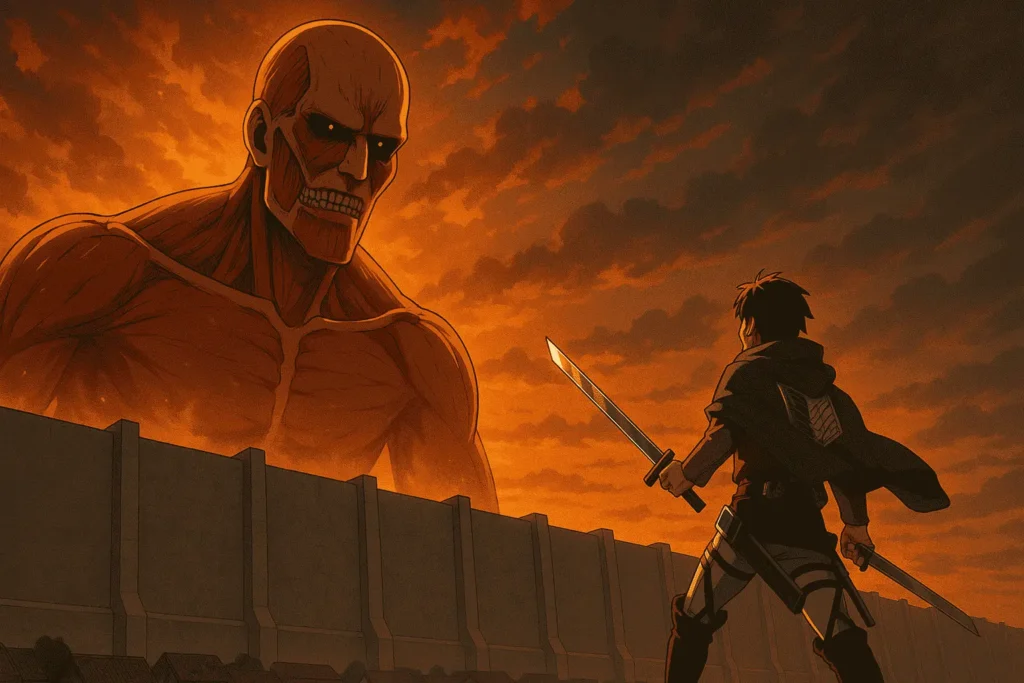
Attack on Titan has taken the anime world by storm, blending intense action with deep storytelling. In this Attack on Titan review, we provide a comprehensive guide to the series – explaining all seasons and episodes – and explore why it’s considered a must-watch phenomenon for both newcomers and long-time anime fans. This complete series overview covers the plot of each season, key characters, and the elements that make Attack on Titan a standout title in modern anime.
What Is Attack on Titan? (Overview)
Attack on Titan (Japanese: Shingeki no Kyojin) is a Japanese manga and anime series set in a world where humanity cowers behind enormous walls to protect itself from giant, man-eating creatures known as Titans. The story follows Eren Yeager, a determined youth who vows to exterminate all Titans after a devastating Titan attack destroys his hometown and kills his mother. Created by writer-artist Hajime Isayama, the manga ran from 2009 to 2021, and its popular anime adaptation aired from 2013 through 2023.
Over its run, the Attack on Titan anime was split into four seasons (with the final season divided into multiple parts) totaling nearly 90 episodes. Wit Studio produced the first three seasons, known for their high-quality animation and dynamic action scenes, while studio MAPPA took over for the fourth and final season. The series has been a global success, with the manga selling over 140 million copies worldwide (making it one of the best-selling manga of all time) and earning prestigious awards like the Kodansha Manga Award and the Harvey Award. Critics and fans praise Attack on Titan for its gripping plot, complex characters, and unflinching themes, which together have made it a worldwide phenomenon.
Before diving into each season’s storyline, be aware that Attack on Titan features mature themes and graphic violence. Its tone is dark and suspenseful, exploring questions of survival, freedom, and morality. Now, let’s break down all seasons of Attack on Titan explained in chronological order, highlighting the major developments of each part of the saga.
Attack on Titan: All Seasons Explained
Attack on Titan’s story unfolds across four main seasons (plus a couple of special finale episodes). Below is an overview of each season, including its year of release and key plot points:
Season 1 (2013) – 25 Episodes
Introduction to the Titans: Season 1 sets the stage with the Fall of Wall Maria. In the year 845, the enormous Colossal Titan suddenly breaches Wall Maria, one of humanity’s protective barriers, allowing smaller Titans to flood into the outer district. During this calamity, young Eren Yeager witnesses his mother being eaten by a Titan, a traumatic event that fuels his hatred of Titans and drive for revenge. Eren and his childhood friends Mikasa Ackerman and Armin Arlert escape and enlist in the military, joining the fight to protect humanity.
The season follows their training and early battles as part of the Scout Regiment (Survey Corps). A pivotal battle in Trost District marks the first victory against the Titans when Eren discovers he has the shocking ability to transform into a Titan himself. This revelation changes humanity’s odds and makes Eren a person of great interest to the military. In the latter half of Season 1, the Scouts venture beyond the walls and encounter the mysterious Female Titan, a powerful intelligent Titan who infiltrates their ranks. After an intense chase and fight, she is revealed to be Annie Leonhart, one of Eren’s fellow trainees, in disguise. Eren and his companions manage to defeat the Female Titan, and Annie is captured, ending the season on a cliffhanger with the discovery that Titans are somehow inside the walls themselves, frozen in the very structure of Wall Sina. The mysteries are just beginning.
Season 2 (2017) – 12 Episodes
Clash of the Titans and Hidden Identities: Season 2 picks up with the Scouts dealing with the fallout of Annie’s capture and the startling presence of Titans within the walls. As the Survey Corps investigates, Wall Rose is breached under suspicious circumstances, and the beastly, intelligent Beast Titan makes his first appearance, demonstrating the ability to speak. Chaos erupts as Titans appear behind what should have been safe walls. Amid the crisis, several major revelations occur: it turns out some of Eren’s trusted allies are actually Titan shifters in disguise. Reiner Braun and Bertholdt Hoover, two members of the Scout Regiment, reveal themselves to be the Armored Titan and Colossal Titan (the very monsters who destroyed Wall Maria). Their betrayal stuns Eren and the others. Another comrade, Ymir, is exposed as the Jaw Titan when she heroically transforms to save her friends.
Season 2 is filled with frantic battles and emotional confrontations. Reiner and Bertholdt attempt to kidnap Eren (seeking the power he holds), leading to a desperate conflict. In the struggle, Eren unexpectedly manifests a new power called “the Coordinate,” which allows him to control other Titans momentarily. This ability helps fend off the traitors. By the end of Season 2, the Scouts learn a horrifying truth: the roaming Titans they’ve been fighting might actually be transformed humans – in fact, the very population of certain villages. The season concludes with humanity shaken but more determined, and with the true scope of the Titan threat only beginning to be understood.
Season 3 (2018–2019) – 22 Episodes
Uprising and The Basement Reveal: Season 3 is split into two parts, each with distinct story arcs. In Part 1, the focus turns inward to the political turmoil within the human walls. The government’s dark secrets are exposed as Commander Erwin Smith and the Scouts lead a rebellion against a corrupt royal regime. Historia Reiss (formerly known as Krista) is revealed to be the heir of the true royal bloodline, and a sinister plot by her father, Rod Reiss, involves using Titans to maintain power. This arc (often called the “Uprising Arc”) has fewer Titan battles and more human-vs-human conflict. We see Levi Ackerman face off against Kenny Ackerman (his uncle, a deadly assassin leading the Military Police’s Interior squad). Eventually, the Scouts succeed in overthrowing the false king and instating Historia as the new queen, restoring hope and honesty within the walls. Eren, meanwhile, learns to use a new hardening ability, which becomes key in the fight to reclaim their lands.
Part 2 of Season 3 delivers some of the series’ most intense and pivotal moments. The Scouts embark on a dangerous mission to retake Wall Maria and finally reach Eren’s family basement in Shiganshina, where the secret of the Titans is said to be hidden. A massive battle ensues at Shiganshina against Reiner, Bertholdt, and the Beast Titan (who is revealed to be Zeke Jaeger, Eren’s half-brother). This battle is costly: Commander Erwin leads a suicidal charge against the Beast Titan in a heroic sacrifice, and Armin nearly dies defeating the Colossal Titan. Thanks to the sacrifices of many, the Scouts are victorious and Eren seals the breached wall. They finally unlock the basement and uncover the truth: humanity is not extinct outside the walls. In fact, the people inside the walls are part of a race called Eldians, persecuted by the world beyond. They learn about Marley – a powerful nation across the sea – and that Titans were originally humans of Eldian blood, turned into weapons. This mind-blowing revelation completely shifts the story’s scope. Season 3 ends with the surviving Scouts seeing the ocean for the first time, knowing that a world of both enemies and hope lies beyond the waves.
Read More: 20 Must-Watch Anime on ToonStream for Beginners
Season 4 (2020–2023) – The Final Season (28 Episodes + 2 Specials)
War Across the Ocean and The End of an Era: The fourth and final season dramatically expands the narrative beyond the walls, showing us the outside world and the ongoing conflict with Marley. Several years after the events of Season 3, we are introduced to young warriors in Marley, such as Gabi Braun and Falco Grice, giving a human face to the “other side” of the war. The early part of Season 4 depicts a war scene in Marley and reveals how Marley has used Titans as weapons in global conflicts. Eren and the Scouts, hardened and matured, launch a preemptive attack on Marley’s territory to strike back at those who oppressed their people. This leads to high-casualty battles and the long-awaited grudge matches between Titans (Eren vs. the War Hammer Titan, Levi vs. the Beast Titan, etc.).
As the season progresses, Eren Jaeger takes a darker, more complex path. Without spoiling every detail, Eren decides to take extreme measures that put him at odds with his former friends. He unleashes a cataclysmic event known as the Rumbling, using the Founding Titan’s power to awaken the countless colossal Titans hidden in Paradis Island’s walls as a massive extermination force. In the face of this apocalyptic threat, characters from all sides – including Mikasa, Armin, Levi, as well as former enemies like Reiner – must unite to stop Eren and save the world from destruction. The Final Season is split into multiple parts to accommodate the epic scope of the story. The anime’s conclusion was released as two long special episodes (sometimes referred to as “Final Chapters” or a compilation film) that aired in 2023, bringing the saga to its dramatic end. Without giving away the ending, Attack on Titan’s finale delivers an emotional conclusion to the characters’ journeys and the central theme of breaking the cycle of hatred. The story comes full circle, providing closure on the fate of the Eldians and the world beyond the walls. (As of early 2025, these final episodes have also been compiled into a feature-length edition titled “Attack on Titan: The Last Attack,” for those who prefer to watch the ending as a film.)
Attack on Titan Review – Why It’s Worth Watching
Story and Pacing: Attack on Titan masterfully combines action with mystery and drama. It’s renowned for its unpredictable plot twists and cliffhangers that leave viewers eager for the next episode. The narrative constantly raises questions – about the origin of Titans, the motives of various factions, and the true history of the world – and gradually reveals answers in satisfying (and often surprising) ways. This expert use of suspense kept fans engaged season after season. The tone is generally serious and dark, as the characters face horrific dangers and moral dilemmas. However, the storytelling also allows for quieter moments of character development and the occasional bit of humor or warmth to balance the gloom. Each season builds on the last, expanding the world and upping the stakes, which makes the series feel truly epic in scope.
Characters and Themes: The characters of Attack on Titan are a major strength of the show. Viewers follow Eren’s evolution from a hot-headed revenge-driven teen into a more complex, brooding figure as the burdens on his shoulders grow. Supporting characters like Mikasa (the stoic protector), Armin (the strategic thinker), and Levi (the elite captain known for his strength and dry wit) are fan-favorites that bring depth to the story. Even secondary characters are given moments to shine, and it’s not uncommon for the story to unexpectedly shift focus to flesh out an antagonist’s perspective or a supporting character’s backstory. Themes of friendship, sacrifice, freedom, and the ambiguity of right and wrong are explored throughout. The series doesn’t shy away from tough questions: Who are the real monsters? How far is one willing to go for freedom? The moral complexity, especially in the final season, elevates Attack on Titan beyond a simple good-vs-evil tale. It’s a story where heroes can become villains and vice versa, prompting viewers to empathize with characters on all sides of the conflict.
Animation and Music: In terms of production quality, Attack on Titan is top-notch. The early seasons (animated by Wit Studio) boast fluid, high-energy action sequences – the sight of the Scouts swinging through the city with ODM gear to fight Titans is thrilling and unlike anything in other shows. Iconic moments, like the Colossal Titan’s appearances or battles against the Female Titan, are beautifully animated and richly detailed. The Final Season, handled by MAPPA, shifted the art style slightly and utilized more CGI for Titan battles, but it maintained a high level of intensity and cinematic flair appropriate for the grand finale. The music, composed by Hiroyuki Sawano (with contributions by Kohta Yamamoto in later seasons), deserves special mention. The soundtrack mixes haunting choir pieces with pulse-pounding rock orchestral tracks that amplify every emotional beat. Opening theme songs like “Guren no Yumiya” became anthems for the series’ fans. Overall, the audiovisual presentation greatly enhances the storytelling – expect goosebumps during epic scenes and heartfelt moments alike.
Reception: It’s no exaggeration to say Attack on Titan became a cultural phenomenon. The anime attracted a huge international audience, including many viewers who were new to anime, thanks to its gripping plot and broad availability on streaming platforms. It consistently earned high ratings and critical acclaim throughout its run. The series’ popularity also sparked numerous discussions and theories in online communities; fans would debate the lore and foreshadowing clues at length, which is a testament to how invested people became in the story. By combining mainstream appeal (with its action-horror elements and relatable human drama) and the depth of a complex narrative, Attack on Titan managed to satisfy hardcore anime fans and newcomers alike.
In terms of critiques, some viewers have noted that the story grows very complex in later seasons with a lot of new characters and political exposition. A few episodes in the middle seasons slow down to deliver backstory or set up future events, which might test the patience of those expecting constant action. Additionally, the violent and gory nature of the show (including many character deaths) can be shocking – this isn’t a light or cheerful adventure by any means. However, most fans agree that these aspects serve the story’s realism and stakes. The overwhelming consensus is that Attack on Titan is an exceptional anime series that only gets more compelling over time, rewarding viewers with an unforgettable tale of resilience and humanity’s fight for freedom. If you enjoy intense action, layered storytelling, and don’t mind a bit of heartbreak, Attack on Titan is absolutely worth watching.
Read More: ToonStream APK Download: Complete Installation Guide (Latest Version)
Frequently Asked Questions (FAQ)
Q: How many seasons and episodes does Attack on Titan have?
A: Attack on Titan consists of four seasons. Season 1 has 25 episodes, Season 2 has 12 episodes, Season 3 is split into two parts totaling 22 episodes, and Season 4 (the Final Season) has 28 episodes split into Part 1 and Part 2, plus 2 hour-long special episodes for the grand finale. In total, the series has approximately 87 standard episodes + 2 specials (around 89 episodes of content). This epic narrative spans from 2013 to 2023 in release.
Q: Is the Attack on Titan anime finished?
A: Yes. The anime’s main storyline concluded with the final special episode released in November 2023, bringing the saga to an end. There are no further seasons planned since the anime has fully adapted the ending of the manga. However, the last two episodes were also edited together as a movie edition titled “The Last Attack,” which saw a limited theatrical/streaming release in 2025 for fans who wanted to experience the ending in one go. Aside from the main series, there are a few OAD (OVA) side-story episodes and compilation films, but the core story of Eren and the Titans is complete.
Q: Why is Attack on Titan so popular?
A: Attack on Titan hit a perfect storm of compelling storytelling, high production quality, and broad appeal. Its premise of humanity vs. monsters is immediately gripping, and the show constantly subverts expectations with big twists and mysteries that keep viewers guessing. The characters are well-written and evoke strong emotions – viewers become deeply invested in their fates. Additionally, the anime’s intense action sequences and cinematic presentation set it apart from many other series. It also explores universal themes like the desire for freedom, the horrors of war, and moral ambiguity, which resonate with a wide audience. The combination of these factors, along with positive word-of-mouth and streaming availability, propelled Attack on Titan to worldwide popularity. It’s not only a hit in Japan; it has a huge international fanbase and has been lauded as one of the defining anime of the 2010s. In short, it’s popular because it delivers an unforgettable experience that appeals to both casual viewers and hardcore fans of the genre.
Q: Is Attack on Titan suitable for someone new to anime?
A: Absolutely – in fact, Attack on Titan is often recommended to newcomers because of its gripping, fast-paced plot and relatable emotions. You don’t need prior anime knowledge to enjoy it; the storytelling is very accessible (though be prepared for complex twists in later seasons). Keep in mind, however, that the series is rated for mature audiences. It contains graphic violence, intense battles, and some upsetting scenes. If you are comfortable with darker, horror-themed content, then Attack on Titan can be a thrilling introduction to anime. Its quality of animation and storytelling often leaves a strong impression on first-time viewers. Just be ready for an emotional rollercoaster – this show doesn’t pull its punches when it comes to tragedy and drama.
Conclusion
In summary, Attack on Titan lives up to its reputation as a modern anime masterpiece. This review and guide have covered all episodes and seasons in broad strokes, highlighting how the series evolved from a tale of survival behind walls into a complex epic of war, identity, and the pursuit of freedom. Whether you came for the exciting Titan battles or the thought-provoking narrative, Attack on Titan delivers on both fronts. Its legacy is evident in the impact it has had on fans around the world and the countless discussions it continues to spark. If you’ve not yet experienced this series, consider this a friendly nudge to give it a try. And if you’re already a fan, then you know just how special and unforgettable this journey has been. In the end, Attack on Titan isn’t just about fighting giants – it’s about the indomitable spirit of humanity in the face of doom, a story that will remain influential for years to come.