80s Kids TV Shows: Classic Children’s Programs That Defined a Generation
The 1980s represented a golden age for children’s television, particularly in the United Kingdom where BBC and ITV crafted programming that educated, entertained, and inspired an entire generation. These 80s kids TV shows weren’t merely time-fillers between adult programming—they were carefully constructed experiences that balanced educational mandates with imaginative storytelling, creating shared cultural touchstones that continue to resonate decades later.
During this transformative decade, children’s television evolved from simple puppet shows and cartoons into sophisticated programming that tackled complex themes while maintaining accessibility for young audiences. The era saw the rise of iconic presenters like Philip Schofield in the BBC’s “Broom Cupboard” continuity segments, the development of groundbreaking animation techniques, and the creation of drama series that pushed boundaries in children’s storytelling. Limited channel options meant that millions of children across the UK watched the same programs simultaneously, creating a collective viewing experience that’s nearly impossible to replicate in today’s fragmented media landscape.
This comprehensive guide explores what made kids TV shows from the 80s so special, examining the most influential programs, understanding the unique British approach to children’s broadcasting, and tracing how these shows influenced the programming that followed into the 1990s. Whether you’re seeking nostalgic memories or understanding the historical context of children’s media, this research-backed overview provides insight into the shows that shaped young minds during this remarkable decade.
What Defined 80s Kids TV Shows?
Understanding what made 80s kids TV shows distinctive requires examining the broader broadcasting landscape and cultural context that shaped children’s programming during this period. Several key factors combined to create the unique character of 1980s children’s television.
Limited Channels and Shared Viewing Experiences
Unlike today’s infinite streaming options, British children in the 1980s had access to just three or four terrestrial channels: BBC1, BBC2, ITV, and from 1982, Channel 4. This scarcity created appointment viewing where entire generations watched the same programs simultaneously. The BBC’s carefully structured afternoon schedule guided children from after-school viewing through early evening, with specific time slots for different show types. Drama typically aired at 5:10pm after John Craven’s Newsround, while magazine shows like Blue Peter occupied Monday and Thursday slots. This shared experience created common cultural references that united children across the country.
Educational Mandates and Quality Standards
Both the BBC and ITV operated under broadcasting regulations that required children’s programming to educate as well as entertain. The BBC, funded by license fees rather than advertising, particularly embraced this responsibility. Shows incorporated language development, mathematical concepts, historical education, and social skills into their narratives. Programs like Rainbow targeted pre-schoolers with deliberate focus on vocabulary building and emotional intelligence, while drama adaptations introduced older children to classic literature and complex moral themes.
The Golden Age of Puppetry and Animation
The 1980s marked a renaissance in British puppetry and stop-motion animation. Companies like Cosgrove Hall Films produced sophisticated animated series including Danger Mouse and The Wind in the Willows, while puppet-based shows continued their popularity with enhanced production values. The era also saw hybrid formats combining live-action presenters with animated or puppet co-stars, creating dynamic programming that appealed across age groups. Technical innovations in video effects, particularly systems like Quantel Paintbox and Harry, elevated production quality significantly compared to the previous decade.
Distinct UK vs. US Programming Styles
British children’s television in the 1980s maintained a distinctly different character from American imports. UK shows tended toward naturalistic performances, dry humor that appealed to adults as well as children, and willingness to address challenging topics including poverty, family dysfunction, and social issues. American animated series dominated Saturday mornings, but weekday afternoon programming remained predominantly British-produced with shows reflecting UK culture, class structures, and regional diversity. ITV’s regional structure meant some programs varied by area, adding local flavor to national schedules.
Foundation for 90s Evolution
The innovations and formats established during the 80s directly influenced how children’s television evolved into the 1990s. The decade saw the introduction of Saturday morning magazine shows like Saturday Superstore (later Going Live!), presenter-led continuity that made channels feel like destinations, and increasingly serialized drama that respected young audiences’ ability to follow complex narratives. These developments laid groundwork for the even more sophisticated children’s programming that would emerge in the following decade.
Best 80s Kids TV Shows
Rainbow (ITV, 1972-1992)
Rainbow stands as one of the most beloved and enduring pre-school programs of the 1980s, though it began in 1972 and continued into the early 1990s. Created by Pamela Lonsdale for Thames Television, Rainbow aired weekday mornings and became essential viewing for young children throughout the decade.
The show centered on Geoffrey Hayes, who lived in the Rainbow House with his puppet companions: Zippy, a loud and domineering character whose mouth was a literal zip; George, a shy pink hippo with a gentle personality; and Bungle, an older bear who wore pajamas. The musical trio Rod, Jane, and Freddy provided songs throughout episodes, gradually becoming more integrated into storylines as the decade progressed. Rainbow won the Society of Film and Television Arts Award for Best Children’s Programme in 1975, recognition that underscored its educational quality.
Rainbow’s format cleverly developed language and number skills through everyday situations, conflicts between the characters, and resolution led by Geoffrey’s patient guidance. Zippy represented childhood impulsiveness and self-centeredness, while George embodied shyness and sensitivity. Their contrasting personalities created natural teaching moments about cooperation, sharing, and emotional regulation. The show’s approach to education never felt heavy-handed, instead weaving developmental lessons seamlessly into entertaining narratives that held young attention spans.
Blue Peter (BBC1, 1958-present)
While Blue Peter began in 1958, the show reached new heights during the 1980s under the stewardship of legendary editor Biddy Baxter. The twice-weekly magazine show aired on Mondays and Thursdays at strategic afternoon slots, becoming appointment television for school-age children across Britain. The 80s saw iconic presenters including Janet Ellis, Peter Duncan, Simon Groom, Sarah Greene, and later Caron Keating and Yvette Fielding, each bringing distinct personalities to the program.
Blue Peter’s format combined studio segments with filmed reports, offering incredible variety. The show featured craft demonstrations that inspired millions of children to request “sticky-backed plastic” and cereal boxes, pet care segments with the resident animals, adventure challenges where presenters undertook extraordinary expeditions, charity appeals that raised significant funds, and performances by musical guests. The program balanced entertainment with education, introducing children to diverse topics from archaeology to technology to social issues.
The show’s influence on 80s kids TV shows UK cannot be overstated. Blue Peter badges became coveted awards for children who wrote excellent letters or demonstrated achievement, while the show’s annual appeals taught values of charity and community service. The program also functioned as a promotional vehicle for other BBC children’s dramas, with presenters interviewing cast members and visiting production sets. This interconnected approach helped create cohesion across BBC children’s programming.
Grange Hill (BBC1, 1978-2008)
Grange Hill revolutionized children’s drama by tackling serious issues facing British schoolchildren with unprecedented realism and honesty. Created by Phil Redmond and airing primarily on Tuesday and Friday afternoons at 5:10pm, the show followed students and teachers at a comprehensive secondary school, depicting storylines that ranged from everyday friendship dynamics to controversial topics including drug abuse, teenage pregnancy, bullying, and racism.
The show’s gritty realism distinguished it from previous children’s programming. Characters faced genuine consequences for their actions, storylines developed over multiple episodes, and not everything ended happily. This respect for young audiences’ intelligence and ability to handle complex narratives made Grange Hill essential viewing throughout the 1980s. The show launched careers for numerous British actors who appeared as students during their youth, while its theme tune by Alan Hawkshaw became instantly recognizable.
Grange Hill sparked national conversations about issues affecting young people, sometimes generating controversy that only increased its cultural impact. The show balanced serious storylines with humor and relatable school experiences, creating authentic portrayals that resonated deeply with its target demographic. Its longevity—running for 30 years—testified to its continued relevance, though many consider the 80s era particularly strong for memorable characters and impactful narratives.
Danger Mouse (ITV, 1981-1992)
Cosgrove Hall Films’ Danger Mouse represented British animation at its finest, combining sharp writing, memorable voice work, and distinctive visual style into a show that appealed equally to children and adults. Airing primarily in teatime slots, the series followed the adventures of the world’s greatest secret agent—a white mouse wearing an eyepatch—and his hapless hamster assistant Penfold as they battled the villainous Baron Silas Greenback.
The show’s humor operated on multiple levels, with slapstick action for younger viewers and sophisticated wordplay, pop culture references, and satirical elements for older audiences. David Jason’s vocal performance as Danger Mouse created an iconic character whose catchphrases entered popular culture, while Terry Scott’s nervous Penfold provided perfect comic counterpoint. The animation style, though limited by budget constraints, possessed distinctive charm that made episodes visually memorable.
Danger Mouse’s success helped establish Cosgrove Hall as a premier British animation studio and demonstrated that UK-produced animation could compete with American imports. The show’s self-aware humor—including breaking the fourth wall and commenting on its own production—felt innovative for children’s programming in the early 1980s. Its influence extended beyond entertainment, proving British studios could create internationally successful animated properties.
Newsround (BBC1, 1972-present)
John Craven’s Newsround, though beginning in 1972, became an institution during the 1980s as a trusted news source designed specifically for children. The five-minute program aired at 5:05pm weekdays, immediately before drama programming, providing age-appropriate news coverage that treated young viewers as intelligent citizens capable of understanding world events.
Presenter John Craven became one of British television’s most trusted faces during this period, delivering serious news with appropriate context and sensitivity for younger audiences. Newsround covered everything from political developments to environmental issues to technological advances, never dumbing down content but ensuring accessibility through clear explanation and relevant framing. The program also featured lighter segments including entertainment news and features on topics of interest to children.
Newsround’s educational value extended beyond information delivery—it taught media literacy, critical thinking about current events, and awareness of global issues. The show didn’t shy from difficult topics including war, disaster, and social problems, but handled them with care appropriate for its audience. For many 80s children, Newsround represented their first regular engagement with news media, shaping how an entire generation understood their relationship to current events.
The Box of Delights (BBC1, 1984)
This lavish BBC adaptation of John Masefield’s novel represented the pinnacle of 1980s children’s drama production. Broadcast in six episodes during Christmas 1984, The Box of Delights combined cutting-edge special effects with compelling storytelling, creating a fantasy adventure that captivated children and adults alike. The production utilized then-revolutionary video effects technology including Quantel hardware to create magical transformations, flying sequences, and supernatural elements that seemed impossibly sophisticated for the time.
The story followed young Kay Harker, who receives a magical box from an ancient Punch and Judy showman known as Cole Hawlings. The box can transport its holder through time and shrink them to tiny size, powers that prove essential as Kay battles the sinister Abner Brown and his accomplices who seek the box for their own nefarious purposes. The serial perfectly captured the British tradition of dark, atmospheric children’s fantasy, balancing wonder with genuine menace.
The Box of Delights achieved such success that it became a benchmark for quality children’s drama throughout the subsequent decade. However, its lavish production came at a cost—the serial was made at the expense of most other weekday afternoon dramas that year. The show has been repeated numerous times, most notably compiled into three 50-minute episodes for international sale, and continues to be regarded as one of the finest examples of 1980s British television production for any audience.
The Adventure Game (BBC1, 1980-1986)
This innovative game show combined sci-fi storytelling with puzzle-solving challenges in a format unlike anything else on children’s television. The Adventure Game transported celebrity contestants and a member of the public to the planet Arg, where they navigated through various rooms solving logic puzzles, word games, and physical challenges while attempting to avoid the Vortex—a deadly grid floor that could eliminate players who stepped on the wrong squares.
The show’s production design created an otherworldly atmosphere within BBC studio constraints, using distinctive visual motifs and the memorable dragon-like character Rangdo who communicated through an unusual language requiring translation. Actress Lesley Judd (formerly of Blue Peter) often appeared as one of the contestants, creating cross-promotion with other BBC children’s programming. The show’s blend of education—many puzzles required mathematical or logical thinking—with entertainment made it compulsive viewing.
The Adventure Game represented ambitious programming that respected children’s intelligence while providing genuine entertainment value. The puzzle format meant audiences could play along at home, attempting to solve challenges before contestants. The show’s unique premise and distinctive style made it memorable beyond its relatively modest six-year run, representing the kind of inventive programming that characterized the best of 80s kids TV shows.
Chocky (ITV, 1984-1986)
Based on John Wyndham’s final novel, Chocky represented sophisticated science fiction drama that tackled complex themes including alien contact, intellectual exploitation, and environmental concerns. The serial followed Matthew Gore, a seemingly ordinary boy who begins communicating with Chocky—initially believed to be an imaginary friend but gradually revealed as an alien consciousness attempting to understand and potentially help humanity.
The adaptation updated Wyndham’s 1968 story to contemporary 1980s Britain, incorporating then-current technology including computers and Rubik’s Cubes into the narrative. The show treated its young protagonist with seriousness, depicting genuine psychological investigation when adults become concerned about Matthew’s behavior. Andrew Ellams delivered a compelling performance as Matthew, while the supporting cast including Carol Drinkwater and James Hazeldine grounded the fantastical premise in believable family dynamics.
Chocky’s success led to two sequel series—Chocky’s Children (1985) and Chocky’s Challenge (1986)—expanding the story across multiple years. The show demonstrated that children’s drama could handle science fiction concepts seriously without condescension, respecting young audiences’ capacity for complex narratives. Its themes about environmental destruction and human potential resonated during a decade increasingly concerned with ecological issues.
Saturday Superstore (BBC1, 1982-1987)
This Saturday morning magazine show epitomized the evolution of weekend children’s programming during the 1980s. Airing live for over three hours each Saturday morning, Saturday Superstore combined celebrity interviews, musical performances, competitions, phone-ins, and viewer interaction into an entertaining package hosted by various presenters including Mike Read, Sarah Greene, and eventually Philip Schofield.
The show’s live format created unpredictability and excitement, with technical mishaps, celebrity surprises, and genuine interaction between presenters and audience. Saturday Superstore featured regular segments including the “Superstore Crew,” competitions where viewers could win prizes, and performances by pop stars capitalizing on the show’s large youth audience. The program also incorporated classic cartoons and children’s films into its schedule, creating a comprehensive Saturday morning destination for young viewers.
Saturday Superstore represented the BBC’s response to ITV’s successful Saturday programming, creating a sense of event television that encouraged children to tune in weekly. The show later evolved into Going Live! (1987-1993), which continued the Saturday morning tradition into the early 1990s with similar format and even broader cultural impact. These programs demonstrated how children’s television adapted to become more interactive, personality-driven, and integrated with popular culture.
80s Kids TV Shows UK Viewers Loved
British children’s television in the 1980s possessed distinctive characteristics that set it apart from international programming, creating shows that reflected UK culture, values, and broadcasting traditions. Understanding what made 80s kids TV shows UK special requires examining both the institutional structures and creative approaches that shaped programming.
BBC and ITV Programming Philosophy
The BBC and ITV approached children’s television with fundamentally different structures but shared commitment to quality. The BBC, free from commercial pressure due to license fee funding, could pursue purely educational and cultural objectives. This freedom resulted in programming like documentary series, literature adaptations, and shows addressing social issues without concern for advertiser sensitivities. The corporation’s children’s department, headed by Edward Barnes in the early 1980s and later influenced by drama chief Anna Home, maintained rigorous standards and supported ambitious projects.
ITV’s regional structure created unique dynamics where different companies produced children’s programming for network broadcast. Thames Television, Granada, Central Television, Yorkshire Television, and others contributed shows, bringing regional perspectives and diverse production styles. While ITV operated commercially with advertising breaks, regulations protected children’s programming from certain commercial pressures, ensuring educational value remained priority. The magazine Look-In (1971-1994) provided ITV with promotional vehicle for their children’s shows, creating multimedia presence before such approaches became standard.
Iconic Presenters and Continuity
British children’s television in the 1980s increasingly emphasized presenter-led continuity that transformed channels into destinations with distinct personalities. Philip Schofield’s 1985 arrival in the BBC’s “Broom Cupboard”—a small presentation area where he introduced programs alongside puppet sidekick Gordon the Gopher—revolutionized how children’s programming felt to audiences. Rather than simple announcements between shows, Schofield created entertaining mini-segments, conducted interviews, and built relationships with viewers that made tuning in feel like visiting friends.
This presenter-led approach extended beyond continuity. Magazine shows featured beloved hosts including John Craven, Sarah Greene, and numerous Blue Peter presenters who became household names. These personalities provided continuity across different program types, helping children navigate schedules and creating parasocial relationships that encouraged loyalty to specific channels. The approach represented uniquely British innovation in children’s broadcasting, later copied internationally.
Cultural Identity and British Storytelling
UK children’s programming maintained distinctly British character in storytelling approaches, humor styles, and cultural references. Shows frequently featured British settings, accents, and social contexts that reflected children’s actual lives rather than idealized or exotic locations. Grange Hill’s comprehensive school setting, Rainbow’s suburban home, and Blue Peter’s studio in London all rooted programming in recognizable British environments.
British humor—often dry, self-deprecating, and wordplay-heavy—permeated many programs. Shows like Danger Mouse incorporated distinctly British comedic sensibilities including absurdist elements, understated delivery, and satire. This humor appealed across age ranges, making many children’s shows genuinely entertaining for adult viewers as well. The willingness to address challenging topics including class differences, regional diversity, and social issues distinguished UK programming from more sanitized international alternatives.
Production Values and Innovation
Despite often modest budgets compared to American productions, British children’s television in the 1980s achieved remarkable quality through creativity and innovation. The decade saw pioneering use of video effects technology, sophisticated puppetry, and inventive studio design that maximized limited resources. Shows like The Box of Delights pushed technical boundaries, demonstrating what could be achieved with determination and ingenuity.
British animation studios, particularly Cosgrove Hall Films, developed distinctive visual styles that competed internationally despite budget constraints. Stop-motion animation and limited animation techniques became creative assets rather than limitations, producing memorable shows with unique aesthetic appeal. This resourcefulness characterized much of 80s kids TV shows UK, where creative problem-solving often generated more interesting results than simply throwing money at productions.
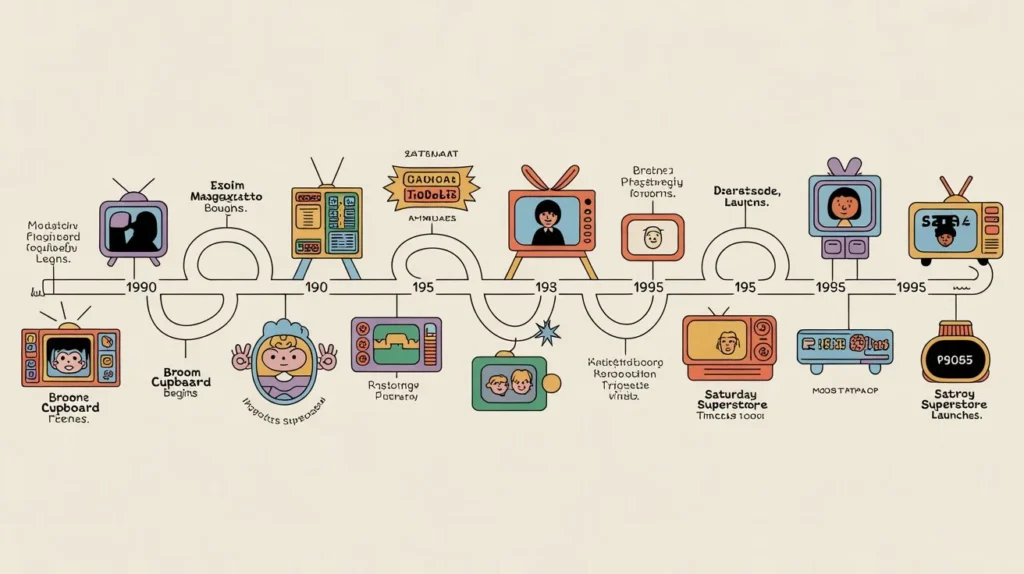
80s and 90s Kids TV Shows UK – The Transition Era
The boundary between 1980s and 1990s children’s television was fluid rather than sharp, with many shows bridging both decades and evolutionary changes happening gradually rather than suddenly. Understanding this transition period reveals how foundations laid during the 80s influenced programming that came to define the early and mid-1990s.
Storytelling Evolution and Serialization
Children’s drama during the late 1980s increasingly embraced serialized storytelling with continuing narratives across multiple episodes or even series. Shows like Grange Hill had demonstrated that young audiences could follow complex character development over extended periods, emboldening producers to attempt more sophisticated narrative structures. This trend accelerated into the 1990s with dramas including The Demon Headmaster, The Queen’s Nose, and Dark Season—programs that trusted children with thriller elements, ambiguous characters, and storylines requiring sustained attention.
The late 80s also saw greater willingness to blend genres, creating shows that combined fantasy, science fiction, horror, and realistic drama in ways previously uncommon. The Chronicles of Narnia (BBC, 1988-1990) represented ambitious literary adaptation that commenced late in the decade but extended into the next, demonstrating how Sunday teatime drama slots provided opportunities for prestigious productions. These adaptations continued 80s traditions of introducing children to classic literature while employing increasingly sophisticated production techniques.
Technical and Production Changes
The transition from 1980s to 1990s coincided with significant technological changes in television production. Improvements in video technology, digital effects, and editing capabilities enabled more polished productions with visual effects previously impossible or prohibitively expensive. Shows produced in the early 1990s displayed noticeably enhanced production values compared to even late-80s programming, though the creative foundations remained similar.
Animation evolved particularly dramatically during this period. While the 80s relied heavily on traditional cel animation and stop-motion techniques, the 1990s saw early experiments with computer animation and digital compositing that would gradually transform the medium. British animation studios adapted to these changes while maintaining distinctive approaches that differentiated UK programming from American productions.
Continuity and Format Evolution
Saturday morning programming continued evolving beyond Saturday Superstore into Going Live! (1987-1993), which perfected the magazine format with hosts including Philip Schofield, Sarah Greene, and later Phillip Schofield and Sarah Greene. The show maintained core elements from its predecessor while incorporating enhanced viewer interaction through phone-ins, fax machines, and eventually early internet engagement. This evolution demonstrated how children’s television adapted to technological changes while preserving successful format elements.
Weekday afternoon programming also transformed, with the BBC Broom Cupboard format continuing through presenters including Andi Peters and Philippa Forrester. These continuity segments became increasingly sophisticated, featuring elaborate sets, guest appearances, and interconnected storylines that made watching Children’s BBC an experience rather than simply consuming individual programs. ITV developed similar approaches, creating branded children’s blocks that competed directly with BBC offerings.
Shows That Bridged Both Decades
Several programs exemplified the transition by running successfully through both decades. Rainbow continued from the 70s through 1992, maintaining its pre-school audience while adapting to changing educational approaches. Blue Peter seamlessly crossed into the 90s with new presenters but unchanged core mission. Grange Hill perhaps best represented continuity, running from 1978 through 2008 while evolving its storytelling to reflect changing childhood experiences and social issues across three decades.
New shows launched in the late 80s established templates that defined early-90s programming. Going Live! represented perfected Saturday morning television that would influence similar shows internationally. Drama productions from 1988-1989 demonstrated narrative sophistication that became standard in subsequent years. The period from approximately 1987-1992 formed a distinct transitional era where 80s foundations met 90s innovations, creating particularly rich programming that drew from both decades’ strengths.
Why They’re Remembered Together
Adults who were children during this period often remember 80s and 90s kids TV shows UK as a continuum rather than distinct eras. This perception reflects the gradual nature of change and the fact that many beloved programs spanned both decades. The shared cultural experience of limited channels and appointment viewing extended into the early-to-mid 1990s before cable, satellite, and later internet fundamentally fragmented audiences.
Nostalgia for this era encompasses roughly 1980-1995, representing a distinctive period in British broadcasting when children’s television maintained high production standards, educational commitments, and cultural cohesion that subsequent fragmentation diminished. The programming from this extended period created lasting memories and shared references for a generation, explaining why 80s and 90s kids TV shows UK are frequently discussed together as a unified golden age of children’s broadcasting.
Frequently Asked Questions
What were the most popular 80s kids TV shows?
The most popular kids TV shows from the 80s included Rainbow, Blue Peter, Grange Hill, Danger Mouse, Newsround, The Box of Delights, Saturday Superstore, The Adventure Game, and Chocky. These programs attracted millions of viewers and became cultural touchstones for children throughout the UK during the decade.
What kids TV shows were popular in the UK during the 1980s?
In the UK, 80s kids TV shows like Grange Hill, Blue Peter, and Rainbow dominated afternoon programming, while Saturday morning shows including Saturday Superstore provided weekend entertainment. ITV contributed popular programs including Danger Mouse, while BBC drama slots featured prestigious adaptations including The Box of Delights and Chocky. Both channels offered mix of education and entertainment programming throughout the decade.
Why are 80s kids TV shows still remembered today?
The 80s kids TV shows remain memorable because they created shared cultural experiences during an era of limited viewing options, balanced quality entertainment with genuine educational value, featured innovative storytelling and production techniques, and respected young audiences’ intelligence. The programs from this decade shaped childhood experiences for an entire generation, creating lasting nostalgia and continued cultural relevance.
Which 80s kids shows continued into the 90s?
Several shows bridged both decades including Rainbow (continued until 1992), Blue Peter (ongoing since 1958), Grange Hill (ran until 2008), and Newsround (still broadcasting). Saturday morning programming evolved from Saturday Superstore into Going Live! in 1987, which continued into the early 90s. Many shows that premiered in the late 80s also extended well into the next decade.
How did BBC and ITV children’s programming differ in the 1980s?
BBC programming, funded by license fees, prioritized educational content and could pursue ambitious projects without commercial pressure. ITV, though commercial, maintained strong educational commitments due to broadcasting regulations while bringing regional diversity through its production structure. Both channels offered high-quality programming with BBC typically leading in drama and documentaries while ITV excelled in animation and entertainment formats.
What time did children’s TV air in the 1980s?
Children’s programming typically aired after school from approximately 3:30-5:30pm on weekdays, with BBC carefully structuring afternoon schedules around shows like Blue Peter (Mondays and Thursdays) and Grange Hill (Tuesdays and Fridays). Newsround aired at 5:05pm daily. Saturday mornings featured extended blocks including Saturday Superstore. Pre-school programs including Rainbow aired during morning hours.
Were American shows popular on UK kids TV in the 1980s?
While some American animated series including The Muppet Show and Sesame Street aired in the UK, the majority of weekday afternoon programming remained British-produced. Saturday mornings featured more American cartoons, but overall UK children’s television maintained distinctly British character with domestic productions dominating schedules on both BBC and ITV.
Read More: