Best Old Kids Shows of All Time: Classic & Educational Favorites
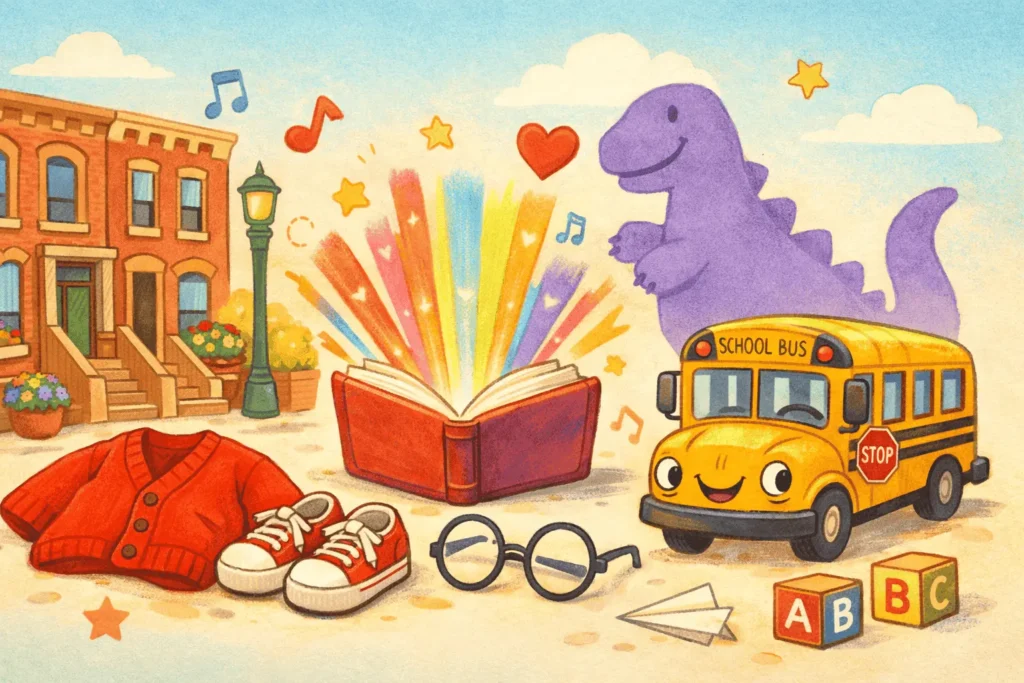
Before streaming platforms and on-demand content transformed how children consume media, generations grew up gathering around television sets at specific times to watch their favorite programs. Old kids shows from the 1970s through early 2000s weren’t just entertainment—they were shared cultural experiences that shaped childhood development, taught fundamental skills, and created lasting memories that continue to resonate decades later.
These classic programs emerged during a pivotal era when educators, psychologists, and broadcasters collaborated to prove that television could be more than a “vast wasteland.” Networks like PBS, Nickelodeon, and even commercial broadcasters developed programming that balanced educational content with genuine entertainment value. The result was a golden age of children’s television that modern parents still reference when seeking quality content for their own kids.
Understanding why old kids TV shows remain relevant requires looking beyond nostalgia. Research from institutions like the Joan Ganz Cooney Center and longitudinal studies on media effects demonstrate that well-designed children’s programming can enhance school readiness, improve social-emotional competencies, and foster lifelong learning habits. This article examines the best old shows for kids through both an analytical lens and an appreciation for their enduring cultural impact.
How We Evaluated the Best Old Kids Shows
Determining which old TV shows for kids deserve recognition as the greatest requires a multifaceted approach that goes beyond personal preference or viewership numbers alone.
Educational Impact: Did the show incorporate evidence-based teaching methods? Was it developed in consultation with child development experts? Did it address age-appropriate learning objectives in literacy, numeracy, science, or social skills?
Cultural Influence: How did the show shape childhood experiences for its generation? Did it introduce important conversations about diversity, representation, or social issues? Has it maintained relevance across multiple generations?
Longevity and Consistency: Programs that sustained quality across multiple seasons or decades demonstrate their ability to adapt while maintaining core educational values. Consistency in messaging and production quality matters when evaluating lasting impact.
Research-Backed Design: Many classic old PBS kids shows were developed using the “CTW Model” or similar frameworks that integrated formative research, expert consultation, and continuous evaluation into content creation.
Critical and Audience Reception: Recognition from educational organizations, teaching communities, and media literacy groups provides objective validation beyond subjective childhood memories.
Read More: Best PBS Kids Shows of All Time: Classic & Educational Favorites
Best Old Kids Shows of All Time
Sesame Street (PBS, 1969–Present)
When Sesame Street premiered in 1969, it revolutionized children’s television by proving that educational content could be genuinely entertaining. This groundbreaking series remains the benchmark against which all old kids shows are measured.
Target Age: 2–5 years
Educational Focus:
- Early literacy and letter recognition
- Basic numeracy and counting
- Social-emotional learning
- Cultural diversity and inclusion
Sesame Street pioneered the integration of research into content development. Each episode was tested with child audiences, and the show’s effectiveness has been validated through decades of academic studies. Research published in educational journals demonstrated that regular viewers showed improved vocabulary, letter recognition, and school readiness compared to non-viewers.
The show’s cultural impact extended beyond education. Characters like Big Bird, Oscar the Grouch, Cookie Monster, and Elmo became cultural icons recognized worldwide. Sesame Street addressed difficult topics including death, divorce, disability, and racial justice with age-appropriate sensitivity, helping multiple generations of children process complex emotions and social realities.
Mister Rogers’ Neighborhood (PBS, 1968–2001)
Fred Rogers created a revolutionary space in children’s media by speaking directly to young viewers with radical respect and emotional honesty. Unlike fast-paced programming, Mister Rogers’ Neighborhood moved deliberately, treating children as capable of understanding complex feelings.
Target Age: 2–6 years
Educational Focus:
- Emotional intelligence and regulation
- Self-worth and identity development
- Imaginative play
- Processing difficult emotions
Rogers addressed topics other old kids TV shows avoided: death, divorce, war, anger, and fear. His famous 1969 congressional testimony helped save public broadcasting funding and demonstrated television’s potential for positive childhood development. Modern child psychology research has validated Rogers’ approach, noting that his slow pace and emotional directness aligned perfectly with how young children process information.
The show’s legacy extends into contemporary discussions about mental health, with mental health professionals frequently citing Rogers’ teachings about emotional validation and self-acceptance.
Reading Rainbow (PBS, 1983–2006)
Hosted by LeVar Burton, Reading Rainbow inspired generations to discover the joy of reading. This beloved series won over 200 broadcast awards and became one of the most successful old PBS kids shows in history.
Target Age: 5–9 years
Educational Focus:
- Reading motivation and comprehension
- Literature appreciation
- Critical thinking
- Cultural exploration through books
Each episode explored themes through featured books, often connecting reading to real-world experiences through field trips and expert interviews. Burton’s warm, encouraging presence made reading feel like an adventure. The show’s unique approach of featuring book reviews by actual children gave young viewers ownership over literacy.
Research studies demonstrated that children exposed to Reading Rainbow showed higher reading motivation, library usage, and positive attitudes toward books. The program’s iconic theme song—”Take a look, it’s in a book”—remains embedded in cultural memory, immediately recognizable to anyone who grew up during its run.
Arthur (PBS Kids, 1996–2022)
Based on Marc Brown’s book series, Arthur became one of the longest-running animated series in television history with 25 seasons spanning over two decades. This achievement alone establishes it among the greatest old shows for kids.
Target Age: 4–8 years
Educational Focus:
- Literacy and library culture
- Conflict resolution and friendship dynamics
- Family relationships
- Cultural and ability diversity
Arthur excelled at presenting everyday childhood challenges—from dealing with bullies to managing performance anxiety—in relatable, non-condescending ways. The show featured one of the most diverse casts in children’s animation, including characters with dyslexia, Asperger’s syndrome, and various family structures.
The series maintained cultural relevance across changing decades, addressing contemporary issues while preserving its core educational mission. Episodes became classroom teaching tools, with educators using storylines to facilitate discussions about empathy, problem-solving, and social dynamics.
The Magic School Bus (PBS Kids, 1994–1997)
Ms. Frizzle’s wild educational field trips made science thrilling for an entire generation. This animated series combined rigorous scientific content with humor and adventure, proving that complex concepts could be accessible to young learners.
Target Age: 6–10 years
Educational Focus:
- Science concepts across disciplines (biology, physics, chemistry, earth science)
- Scientific method and inquiry
- Problem-solving and critical thinking
- Teamwork and collaboration
Based on Joanna Cole and Bruce Degen’s book series, the show tackled sophisticated topics—from the human digestive system to planetary science—without oversimplifying. The program trusted that children could understand complex ideas when presented engagingly. Many scientists and STEM professionals credit The Magic School Bus as an early inspiration for their career paths.
The show’s educational effectiveness has been documented in studies examining science education media, with researchers noting its success in maintaining scientific accuracy while keeping content entertaining.
Barney & Friends (PBS, 1992–2009)
Though frequently parodied by adults, Barney & Friends served its preschool audience with remarkable effectiveness. The purple dinosaur became a cultural phenomenon throughout the 1990s and early 2000s, representing comfort and learning for millions of young children.
Target Age: 1–5 years
Educational Focus:
- Basic social skills and manners
- Sharing and cooperation
- Music and movement
- Imaginative play
Barney used repetition, music, and direct address to teach fundamental social-emotional skills. While the show’s simplicity made it a target for adult mockery, research supported its effectiveness with very young children. The program featured diverse child actors and emphasized inclusion, kindness, and emotional regulation—skills critical for early childhood development.
The show’s cultural impact was undeniable, with theme parks, merchandise, and international adaptations reaching children worldwide. For many children in the 1990s, Barney represented their first sustained educational media experience.
Schoolhouse Rock! (ABC, 1973–1985)
These animated musical shorts revolutionized how children learned grammar, mathematics, science, and civics. Schoolhouse Rock! proved that catchy songs could make educational content memorable and engaging.
Target Age: 6–12 years
Educational Focus:
- Grammar and language arts
- Mathematics and multiplication
- American history and government
- Science concepts
Songs like “Conjunction Junction,” “I’m Just a Bill,” and “Three Is a Magic Number” became embedded in cultural memory, with adults decades later still able to recite lyrics. The shorts aired during Saturday morning cartoon blocks, reaching millions of children during a era when Saturday morning television was appointment viewing.
Educational researchers have noted the program’s effectiveness in making abstract concepts concrete through visual metaphors and musical mnemonics. Teachers continued using Schoolhouse Rock! segments in classrooms long after original broadcasts ended.
Where in the World Is Carmen Sandiego? (PBS, 1991–1995)
This game show based on the popular computer game series made geography, history, and cultural knowledge exciting through its mystery-solving format.
Target Age: 8–14 years
Educational Focus:
- Geography and world cultures
- Historical facts and context
- Critical thinking and deduction
- Research skills
The show featured a diverse cast and made learning about world geography genuinely thrilling. Host Lynne Thigpen as “The Chief” and the show’s house band Rockapella became beloved figures. The program demonstrated that educational content could be formatted as exciting entertainment without sacrificing rigor.
Studies on educational game shows noted Carmen Sandiego‘s success in increasing geographic literacy and curiosity about world cultures among viewers.
Zoom (PBS, 1972–1978, 1999–2005)
Zoom took a unique approach by featuring only child hosts and user-generated content sent in by viewers. This old PBS kids show empowered children as content creators and active participants.
Target Age: 8–12 years
Educational Focus:
- STEM activities and experiments
- Arts and crafts
- Physical fitness and games
- Media literacy and communication
The show’s revival in 1999 introduced a new generation to its participatory format. Zoom encouraged children to try activities at home, send in their own ideas, and see themselves represented on screen. This approach fostered agency and creativity in ways few other old kids TV shows attempted.
The Electric Company (PBS, 1971–1977)
Created by the Children’s Television Workshop (now Sesame Workshop), The Electric Company used sketch comedy, music, and animation to teach reading to elementary-age children.
Target Age: 7–10 years
Educational Focus:
- Reading comprehension and decoding
- Phonics and word recognition
- Vocabulary building
- Media literacy
The show featured an impressive cast including Morgan Freeman, Rita Moreno, and Bill Cosby (before his later controversies). Its innovative use of comedy sketches to teach reading skills influenced educational programming for decades. Research demonstrated that viewers showed measurable improvements in reading skills, particularly among children from under-resourced communities.
3-2-1 Contact (PBS, 1980–1988)
This science education series made STEM subjects accessible and exciting for upper elementary audiences, featuring hands-on experiments, real scientists, and the popular recurring segment “The Bloodhound Gang.”
Target Age: 8–12 years
Educational Focus:
- Scientific inquiry and experimentation
- Technology and engineering concepts
- Mathematics in real-world contexts
- Career awareness in STEM fields
3-2-1 Contact addressed the growing need for quality science education during a period of increasing technological advancement. The show featured diverse hosts and regularly included girls in scientific activities, helping to counter gender stereotypes in STEM fields.
Why Old Kids Shows Still Matter
The best old kids shows of all time share common characteristics: respect for young audiences, commitment to educational outcomes, diverse representation, and the belief that television could be a force for positive development. These programs didn’t just occupy children’s time—they taught critical skills, shaped values, and created shared cultural touchstones.
Modern streaming platforms have revived many classic old shows for kids, introducing them to new generations. Parents who grew up with these programs now share them with their own children, creating intergenerational bonds through media. This phenomenon demonstrates that quality educational content transcends technological changes and shifting entertainment landscapes.
Research comparing historical children’s programming to contemporary content often finds that old PBS kids shows maintained higher educational standards and slower pacing that better aligned with child development principles. While modern shows have advantages in animation quality and cultural representation, the foundational approaches pioneered by these classics remain instructive for content creators today.
The Lasting Legacy of Classic Children’s Television
Old TV shows for kids from the 1970s through early 2000s represent a unique period in media history when public broadcasting and educational institutions collaborated to create content that genuinely served children’s developmental needs. These programs proved that television could be more than passive entertainment—it could be an active teaching tool, a source of comfort, and a catalyst for imagination.
For contemporary parents navigating overwhelming content choices, these old shows for kids offer a tested alternative backed by decades of research and real-world impact. Whether revisiting childhood favorites or discovering them for the first time, classic children’s television continues to offer valuable lessons about education, creativity, and the power of media to shape young minds positively.
The cultural impact of these programs extends beyond individual memories. They influenced educational policy, inspired careers in teaching and media, and demonstrated that investing in quality children’s content yields long-term societal benefits. As we continue evaluating children’s media in the streaming era, the standards established by the best old kids shows remain relevant benchmarks for excellence.
FAQ’s:
What are the best old kids shows of all time?
The best old kids shows include Sesame Street (1969), Mister Rogers’ Neighborhood (1968-2001), Reading Rainbow (1983-2006), Arthur (1996-2022), The Magic School Bus (1994-1997), Schoolhouse Rock! (1973-1985), and The Electric Company (1971-1977). These programs combined educational content with engaging entertainment and have been validated by decades of child development research and educational impact studies.
What old PBS kids shows were most popular?
The most popular old PBS kids shows include Sesame Street, Mister Rogers’ Neighborhood, Arthur, Reading Rainbow, Barney & Friends, The Magic School Bus, Where in the World Is Carmen Sandiego?, Zoom, 3-2-1 Contact, and Between the Lions. These programs achieved high viewership numbers, critical acclaim, and lasting cultural influence across multiple generations.
Why are old kids TV shows still relevant today?
Old kids TV shows remain relevant because they teach timeless fundamental skills like literacy, numeracy, emotional regulation, and social competence. Many were developed using research-based educational frameworks that align with child development principles. Their slower pacing, clear educational objectives, and values-based content offer alternatives to modern fast-paced programming. Additionally, they provide intergenerational connection opportunities when parents share childhood favorites with their own children.
What made old shows for kids educational?
Old shows for kids were educational because they were developed in consultation with child psychologists, educators, and curriculum specialists. Programs like Sesame Street pioneered the integration of formative research into content development, testing episodes with child audiences before broadcast. These shows aligned with early childhood education standards and used evidence-based teaching methods including repetition, scaffolding, and age-appropriate explanations.
Are old kids shows better than modern children’s programming?
Old kids shows and modern programs each have strengths. Classic shows often featured slower pacing better aligned with child attention spans, clearer educational objectives, and more direct teaching methods. Modern programs benefit from improved animation technology, greater cultural diversity, and updated content reflecting contemporary issues. Research suggests both eras produced quality educational content, and the best choice depends on individual child needs and parenting goals.
Where can I watch old kids TV shows with my children?
Many old kids TV shows are available on streaming platforms including PBS Kids (pbskids.org), HBO Max (Sesame Street), YouTube (official channels), and Amazon Prime Video. Some classic series have been released on DVD collections. PBS and Sesame Workshop maintain archives of educational content. Local libraries often have collections of classic children’s programming available for borrowing.
What age groups did old kids shows target?
Old kids shows targeted specific developmental stages: preschool programs (ages 2-5) like Sesame Street, Mister Rogers’ Neighborhood, and Barney & Friends; early elementary (ages 5-8) like Reading Rainbow and Arthur; and upper elementary (ages 8-12) like 3-2-1 Contact, Where in the World Is Carmen Sandiego?, and The Magic School Bus. Content complexity aligned with cognitive development stages appropriate for each age range.
Read More: Who Is the Most Powerful Anime Character? A Definitive Analysis
Read More: Who Is the Strongest Anime Character? Best Analysis By Toonstream 2026